The thing nobody admits about libido mismatch
One of you wants sex twice a week. The other wants it once a month. Or maybe it's the reverse. The frustration builds quietly. The higher-desire partner starts feeling rejected. The lower-desire partner starts feeling pressured. After a while, the tension doesn't leave the bedroom. It moves into the kitchen, the car, the space between you.
Here's what I see in my practice: couples in libido mismatch often think the solution is making the lower-desire partner want sex more. That's not the solution. It's the problem. That's the friction that kills intimacy.
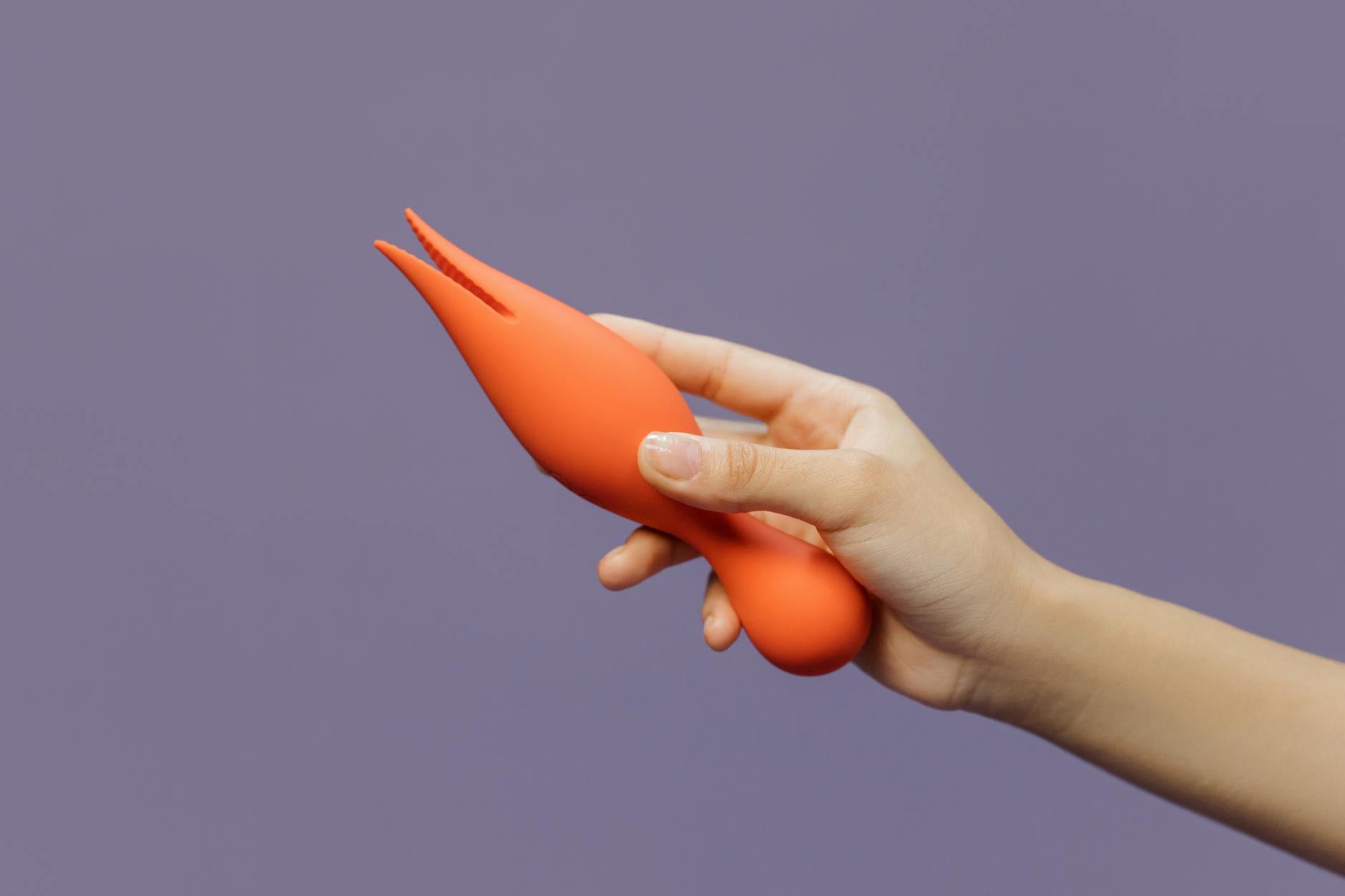
Why lemon vibrators change the math differently than you'd expect
Most couples I work with assume that if the higher-desire partner has a lemon clitoral vibrator, problem solved. Solo pleasure takes the pressure off the other person. And it does, sometimes. But that's only true if the framing doesn't stay stuck in resentment.
Here's what shifts when a lemon vibrator enters a mismatched-libido relationship:
First, the higher-desire partner stops waiting for the other person to initiate. That alone changes the whole dynamic. You're not managing your arousal around their availability. You're honoring it independently.
Second, the lower-desire partner often experiences a weird paradox: knowing their partner has a tool that works well actually lowers the pressure they feel. Not because the higher-desire partner is "handling it elsewhere," but because the conversation becomes less desperate. It becomes more curious.
Third, and this is the part couples rarely talk about, a lot of lower-desire partners start wanting to watch or be present while their partner uses a lemon vibrator. Not because they suddenly have more desire. But because the framing has shifted from "I'm broken" to "this is hot."
The psychology of being the higher-desire partner
You're turned on. Your partner isn't. You try to ask. They say "maybe later." Later doesn't come. You stop asking. They notice you stopped asking. Now they feel guilty, which makes them want sex even less.
This spiral is one of the most common relationship patterns I see. And it doesn't resolve by forcing the lower-desire partner to perform.
When you use a lemon vibrator without resentment attached, something shifts. You're not accumulating frustration. You're processing arousal. Your body isn't sending your brain the message "I'm stuck waiting for them." It's sending "I'm handling my own pleasure."
The weird part? Partners notice. They notice that you're not tense about it anymore. They notice that sex becomes something you both want again, instead of something one person is managing and the other is dreading.
The psychology of being the lower-desire partner
You love your partner. You're attracted to them. But you don't want sex as often as they do. So you feel broken. They feel rejected. Both things happen simultaneously, and both feel true.
Then your partner gets a lemon clitoral vibrator. If the conversation is "I'm gonna use this because you don't want me," you feel worse. You feel like you failed.
But if the conversation is "I'm gonna use this because my body wants pleasure, and I'm not going to resent you for having a different rhythm," something different happens. You start to see that their desire isn't your responsibility. And suddenly, the times you do want sex feel less obligatory. They feel like a choice you're making together.
Lower-desire partners I've worked with often say the same thing: once my partner stopped trying to convince me to want more, I actually started wanting more. Not to match their drive. But because I wasn't bracing against pressure anymore.
How to actually use a lemon vibrator in a mismatched-libido relationship
The tool only works if the conversation is right. Here's how I recommend framing it:
With your partner, before you buy it: "My body has needs. Your body has different needs. That's not a failure on either of our parts. I want to take responsibility for my own pleasure so we're not in a pressure spiral." That's it. Don't oversell. Don't promise it'll fix everything.
When you first use it: Privacy is fine. Solo is fine. If your partner wants to be in the room or watch, that's a conversation to have separately. No pressure either way. Some couples find that presence deepens connection. Some need the separation. Both are normal.
After using it: Don't perform gratitude toward your partner for "allowing" it. Don't hide it like shame. It's a tool. Treat it like one. If they ask how it felt, tell them. If they don't ask, don't force the conversation.
Check in monthly: "How's this working for you? For us?" These aren't therapy sessions. They're logistical. Has the pressure dropped? Are we still connecting? What would help?
When a lemon vibrator helps the intimacy conversation
Something unexpected happens in mismatched-libido couples who use a lemon vibrator the right way: they start having better sex when they do have it.
Why? Because there's no scorekeeping. The higher-desire partner isn't resentful. The lower-desire partner isn't obligated. When you come together, it's an actual choice, not a compromise.
I had a couple in my practice where the wife wanted sex three times a week and the husband wanted it once a month. After about six weeks of her using a lemon clitoral vibrator regularly, without resentment, their frequency didn't change much. But the quality of their sex did. He was actually present. She was actually relaxed. They were connecting instead of performing.
What lemon vibrators don't fix
Let me be clear: a lemon vibrator is not a workaround for a mismatch you resent. If you're using it because you're angry at your partner for not wanting sex, that's information, not a solution. That anger needs to come up. Maybe with a therapist. Maybe in a hard conversation.
Also, if the lower-desire partner's low desire is actually because they're not attracted to their partner anymore, or because they're dealing with trauma, or because they're on medication that tanks libido, a lemon vibrator changes nothing. Those are different problems with different solutions.
A lemon vibrator helps when the mismatch is real but neither person is broken. When one person's body just works differently than the other's. When you both want connection but you're having trouble finding the rhythm.
How it actually feels
Users describe lemon vibrators differently once they're using them in the context of a mismatched-libido relationship. The sensation feels less frantic. Less like you're racing against time or resentment.
It feels more like permission. Permission to be sexual. Permission to want things that are different from what your partner wants. Permission to take care of yourself without guilt.
That permission changes everything. Not the vibrator itself. The permission.
The conversation you need to have
Before you buy a lemon vibrator, your partner needs to understand what you're actually doing. "I want to use this so we stop building resentment" is honest. "I want to use this so you don't feel obligated" is honest. "I'm using this for me" is also honest.
All three are true. All three deserve to be said out loud.
Then listen. If your partner feels threatened, that's information. If they're curious, that's information too. If they want to be involved, that's a separate conversation. But the baseline conversation has to happen first.
Because a lemon vibrator in the hands of someone who feels guilty or resentful is just a toy. But a lemon vibrator in the hands of someone who's made peace with their own desire? That's a tool that can help both of you find your way back to each other.
FAQ
Will using a lemon vibrator make my partner think I don't want them?
Only if you frame it that way. If you're using it with resentment, yes. If you're using it with honesty about your own body, no. The framing you choose matters more than the vibrator itself.
Should I hide it from my partner or be open about it?
Be open. Hiding it usually means shame is driving the choice, and shame makes everything worse in relationships. If you're not comfortable being open, that's worth examining separately.
What if my partner feels insecure when I use a lemon vibrator?
Insecurity is real and valid. That's a conversation, not a reason to stop. "I feel insecure when you use that" is information about what your partner needs from you emotionally, not a reason to abandon your own pleasure.
Can using a lemon vibrator actually increase desire in the lower-desire partner?
Sometimes. Not because the vibrator does anything magical. But because removing pressure often naturally increases desire. When you're not bracing against obligation, your body relaxes. When your body relaxes, sometimes arousal can happen more naturally.
How often should I use a lemon vibrator if my partner and I have mismatched libidos?
As often as your body wants to. There's no schedule. If you're using it on a timer to prove something, you're using it wrong. If you're using it because your body actually wants it, use it as much as that's true.
Should my partner use a lemon vibrator too if we have a libido mismatch?
Maybe. That's a separate conversation. Some couples benefit from both people having their own tools. Some lower-desire partners actually find that having a tool increases their pleasure in solo sessions, which can shift their whole relationship to sex. But that's their choice, not something you convince them into.
Here's what actually matters
Libido mismatch isn't a bedroom problem. It's a communication problem wearing a sexual disguise. A lemon vibrator can't fix communication. But it can create the space where better communication becomes possible.
When you're not desperate. When you're not resentful. When you're not waiting. That's when you can actually talk. That's when you can actually connect.
A lemon clitoral vibrator doesn't fix mismatched desire. But it stops desire mismatch from breaking your relationship. And that distinction matters more than anything else.