The stress response shuts down arousal faster than you'd think
Here's the thing about stress: it's not just a mental state. It's a full-body takeover. When your nervous system perceives a threat, whether that's a work deadline, relationship conflict, financial pressure, or just chronic exhaustion, your body prioritizes survival over pleasure. Arousal literally cannot happen in the same way. This isn't a choice, a mood, or a reflection of how much you want pleasure. It's neurobiology.
The worst part? Most people think it's broken. It's not broken. It's doing exactly what it's supposed to do: keeping you alive.
But here's what changes when you try to use a lemon clitoral vibrator (or any toy) during high-stress periods, and why understanding that matters.
What actually happens to arousal under chronic stress
When you're stressed, your sympathetic nervous system runs the show. This is the "fight or flight" branch. Your cortisol stays elevated, adrenaline flows, and blood gets diverted from your genitals toward your major muscle groups and your brain. Your clitoris, which relies on increased blood flow for sensitivity and engorgement, literally receives less circulation. The tissues don't swell the same way. The nerve endings don't fire with the same intensity.
At the same time, your parasympathetic nervous system, which is responsible for "rest and digest" functions, powers down. This is the system that allows arousal to build. Without it, even a lemon vibrator on its highest setting might feel like neutral stimulation instead of pleasure.
Add in the fact that stress hormones like cortisol suppress testosterone production, and you've got a compound effect. Arousal takes longer. Sensation feels dampened. Orgasm becomes either harder to reach or requires so much mental effort that it stops being enjoyable.
The clitoris doesn't break. Your nervous system just isn't available for pleasure right now.
Why lemon vibrators feel different under stress
Lemon clitoral vibrators use suction stimulation, which works in a specific way: by creating pressure changes that stimulate the complex nerve network around your clitoris. This mechanism is incredibly effective under normal circumstances. But when you're stressed, that sensitivity is compromised.
You might notice:
That the sensation feels distant or numb, even at higher settings. Your nervous system is literally filtering out pleasure signals in favor of threat detection. You're not broken. Your brain is just stuck in survival mode.
That arousal takes significantly longer to build. Where you might normally reach a plateau in 10 to 15 minutes, you're looking at 30 to 45 minutes. Or longer. This isn't laziness. This is your parasympathetic nervous system taking time to engage.
That you need to actually think about pleasure instead of it happening naturally. You're analyzing the sensation, wondering why it's not working, which keeps you locked in your head instead of in your body. This is a vicious cycle: the effort to make it work prevents it from working.
That stopping halfway feels like failure. Under stress, your expectation is that pleasure should feel the same as it always has. When it doesn't, there's shame attached. But the issue isn't the lemon vibrator. It's that your nervous system isn't resourced for pleasure right now.
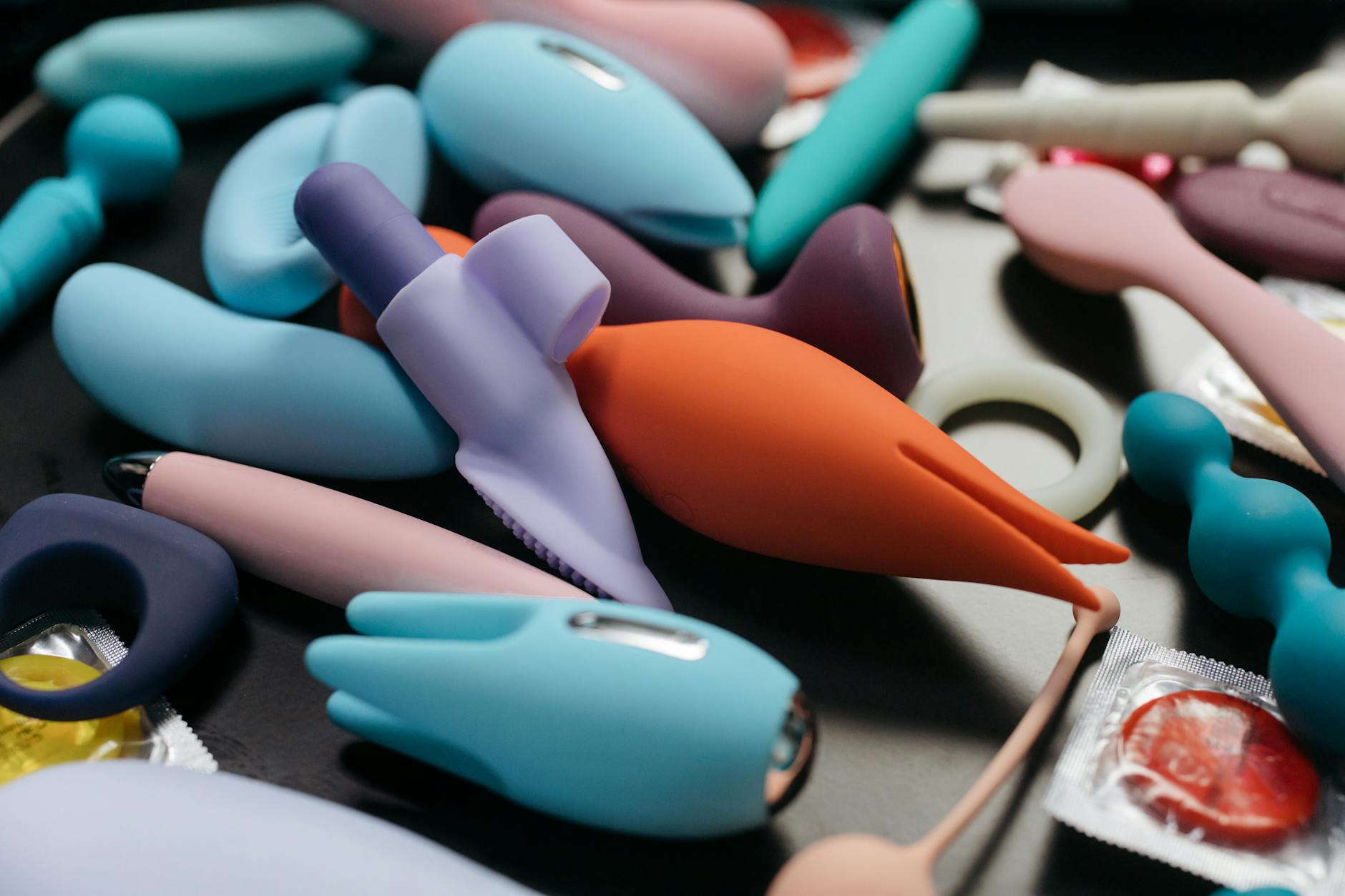
Photo by cottonbro studio on Pexels
The nervous system reset comes before the toy
Here's the shift that changes everything: stop trying to have pleasure happen in spite of your stress. Instead, actually address the nervous system first.
This doesn't mean waiting until your life is perfect. That's not realistic. It means creating a specific container where your body can move out of sympathetic activation, even for 20 minutes.
Three things I recommend before touching any vibrator:
First, extend your exhales. Seriously. When you're stressed, your breathing becomes shallow and fast. This keeps your nervous system in alert mode. Breathing in for a count of four and out for a count of six for five minutes signals your parasympathetic nervous system that you're safe. This isn't meditation or spiritual. It's vagus nerve stimulation, and it's measurable. Your heart rate will drop. Your clitoris will receive more blood flow.
Second, move your body in a way that feels grounding, not goal-oriented. A slow walk, gentle stretching, or even just lying on the floor for five minutes. The point is to move out of your head and into proprioception, the sense of your body in space. This reconnects you to physical sensation in a lower-stakes way, which primes your nervous system for more intimate sensation later.
Third, name what you're stressed about without trying to fix it. Literally say it out loud or write it down: "I'm stressed about money," "My partner and I haven't resolved that fight," "I'm exhausted from work." This sounds absurd, but it works. Your brain is resourced for threat detection. Naming the threat allows your brain to categorize it as handled and move on. When you don't name it, your nervous system stays vigilant.
When stress is temporary versus chronic
Short-term stress (a stressful week at work, a conflict with your partner, a financial worry) usually lifts arousal within a few days to a week of that stress being resolved. Your lemon clitoral vibrator feels normal again. Sensation returns. Arousal rebuilds naturally.
Chronic stress is different. When you've been under sustained pressure for months, your baseline nervous system activation is permanently elevated. Your body forgets what rest feels like. In these situations, trying to use any vibrator, let alone a lemon suction toy, often feels impossible because the problem isn't mechanical. It's systemic.
If you're in chronic stress, I want you to know this: you're not broken. But you might need to pause pleasure practices for a bit and focus on actual nervous system recovery. That might mean therapy, that might mean reducing workload, that might mean addressing relationship dynamics that are draining you. Pleasure will come back. But it comes back last, after your nervous system feels safe again.
The actual protocol when you want to try during stress
If you're moderately stressed and want to reclaim some pleasure instead of waiting until everything settles, here's what works:
Dedicate actual time. Not five minutes between getting ready and your next task. Twenty to thirty minutes where you're not checking the clock. Your body needs time to transition out of alert mode.
Start slower than you normally would. If you usually use your lemon vibrator on pattern five, begin at pattern two. Let sensation build gradually. Your nervous system is hypersensitive to overstimulation when stressed, which can actually create numbness instead of pleasure.
Use more lubrication than usual. Stress-reduced arousal means less natural lubrication. Water-based lube helps you feel sensation without friction that might feel overwhelming.
Skip the orgasm goal. I know this sounds counterintuitive, but when you're stressed, chasing orgasm often blocks it. Instead, explore sensation for its own sake. Does this pattern feel good right now? What about lower settings? Is slower more pleasurable than faster? This takes the pressure off and often allows arousal to build more naturally.
Stop if it's frustrating. The moment you feel frustrated, resistance, or forcing, stop. This is your nervous system telling you it's not resourced for this right now. And that's information, not failure. Your lemon vibrator will still feel amazing once you're less stressed.
Why this matters for partners
If you're in a relationship, this is crucial context. When your partner is stressed and experiences reduced arousal or difficulty with sensation and pleasure, it's not about your attractiveness or your relationship. It's neurobiology. The most supportive thing you can do is help them get their nervous system back online instead of pushing for sexual connection.
This might mean taking some of the mental load off. It might mean a conversation that resolves some tension you've both been sitting with. It might mean giving them space to move their body, breathe, or just rest. When their parasympathetic nervous system has oxygen again, pleasure will return naturally. This actually strengthens intimacy because it removes the pressure and shame around arousal.
Recovery looks different for everyone
There's no one timeline for stress to lift and arousal to return. For some people, it's a few days. For others, it's weeks. For some, it's months of actively addressing what's causing the stress. Your lemon clitoral vibrator isn't the variable here. Your nervous system is.
Be patient with yourself. Sensation returns. Arousal comes back. But it comes back on its own timeline, not on the timeline you think it should. The faster you accept that, the faster your body can actually relax into recovery.
People also ask
Why does stress make clitoral sensation feel numb even with strong vibrators?
Stress activates your sympathetic nervous system, which diverts blood flow away from your genitals toward your muscles and brain. Your clitoris needs increased blood circulation for sensitivity and engorgement. When blood flow is reduced, nerve endings fire less intensely, creating that numb or distant feeling. It's not the vibrator's fault. It's your nervous system prioritizing survival over pleasure.
Can you use a lemon vibrator safely when you're stressed?
Yes, but with intention. The issue isn't safety, it's pleasure. Trying to force arousal when your nervous system is in high-alert mode often creates frustration instead of sensation. If you want to try, focus on nervous system reset first (breathing, movement, naming your stress), keep sessions short and pressure-free, and skip the orgasm goal. If it feels frustrating after 10 minutes, stop.
How long does it usually take for arousal to come back after stress?
It depends on the stress. Short-term stress (a bad week) usually lifts arousal within a few days to a week once the stressor resolves. Chronic stress takes longer because your nervous system's baseline activation stays elevated. You might see improvement in two to four weeks with intentional recovery practices like therapy, reduced workload, or relationship repair. For some, it takes longer.
Is there a difference between stress-reduced arousal and low libido?
Yes. Low libido is often sustained, even when stress isn't high. Stress-reduced arousal is situational and tied to a specific stressor. Once the stress resolves and your nervous system settles, sensation usually returns quickly. With low libido, the lack of desire persists even in relaxed states. They require different approaches, though chronic stress can eventually suppress libido if it goes unaddressed.
Should I use my lemon vibrator more or less when I'm stressed?
Less, with more intentionality. Using it more in hopes of bypassing the stress response often creates frustration. Using it less, but more mindfully during actual nervous system calm, usually delivers better results. The goal is to work with your nervous system, not against it. Quality over frequency.
What's the difference between the Lem vibrator and other clitoral vibrators when dealing with stress-reduced arousal?
The suction mechanism in lemon clitoral vibrators works differently than traditional vibration. It creates pressure changes that stimulate nerve networks, which can feel less intense on numb tissue compared to direct vibration. This can actually be helpful when stressed because you're less likely to overstimulate an already-hypersensitive nervous system. But the underlying issue is still nervous system activation, not the type of toy.
Your pleasure matters. And it returns when your nervous system feels safe. Be patient with both yourself and your lemon vibrator during this season.