Let's talk about the sensitivity problem
You're not broken if standard vibrators feel like too much. Sensitive clitoral tissue is honestly the norm, not the exception. What most people don't realize is that the problem isn't always the intensity level. It's the type of stimulation itself.
Traditional vibrators buzz. That vibration travels through a concentrated point of contact, which can feel sharp, overwhelming, or even slightly painful if you have heightened sensitivity. It's like the difference between someone tapping your shoulder versus someone gently pressing their palm there. Same energy, wildly different sensation.
How lemon vibrators feel different
Lemon clitoral vibrators use suction, not vibration. Instead of a rapid up-and-down or side-to-side buzz pattern, they create a gentle pulse that feels more like a massage or light pressure. The sensation spreads across a wider area of tissue instead of concentrating intensity at one point.
Here's the physics part made simple. A traditional vibrator focuses stimulation on a small surface. A suction-based toy like the Lem distributes that same energy across a larger zone. That distribution means less pressure on any one nerve ending. Less pressure equals less overwhelm.
Many people describe lemon vibrators as feeling like a warm hand or mouth rather than a mechanical buzz. That's not flowery language. That's an actual difference in how the nervous system receives the signal.
Why sensitive skin responds better to suction
Three reasons this matters.
First, texture tolerance. Suction toys typically have a softer opening than the hard plastic or silicone tip of a traditional vibrator. Your sensitive tissue makes contact with something gentler, which immediately reduces that sharp sensation some people describe.
Second, pressure control. You control exactly how much of your tissue enters the suction opening. Less fullness means less intensity. You can inch in gradually instead of jamming a vibrator against yourself and hoping the level is right.
Third, the sensation itself is different. Suction activates different nerve clusters than vibration does. It's not just "less intense buzz." It's an entirely different type of nerve feedback. Some people with vibrator sensitivity find suction completely comfortable, which tells us it's not about weakness in tissue. It's about which stimulation pattern your nerves prefer.
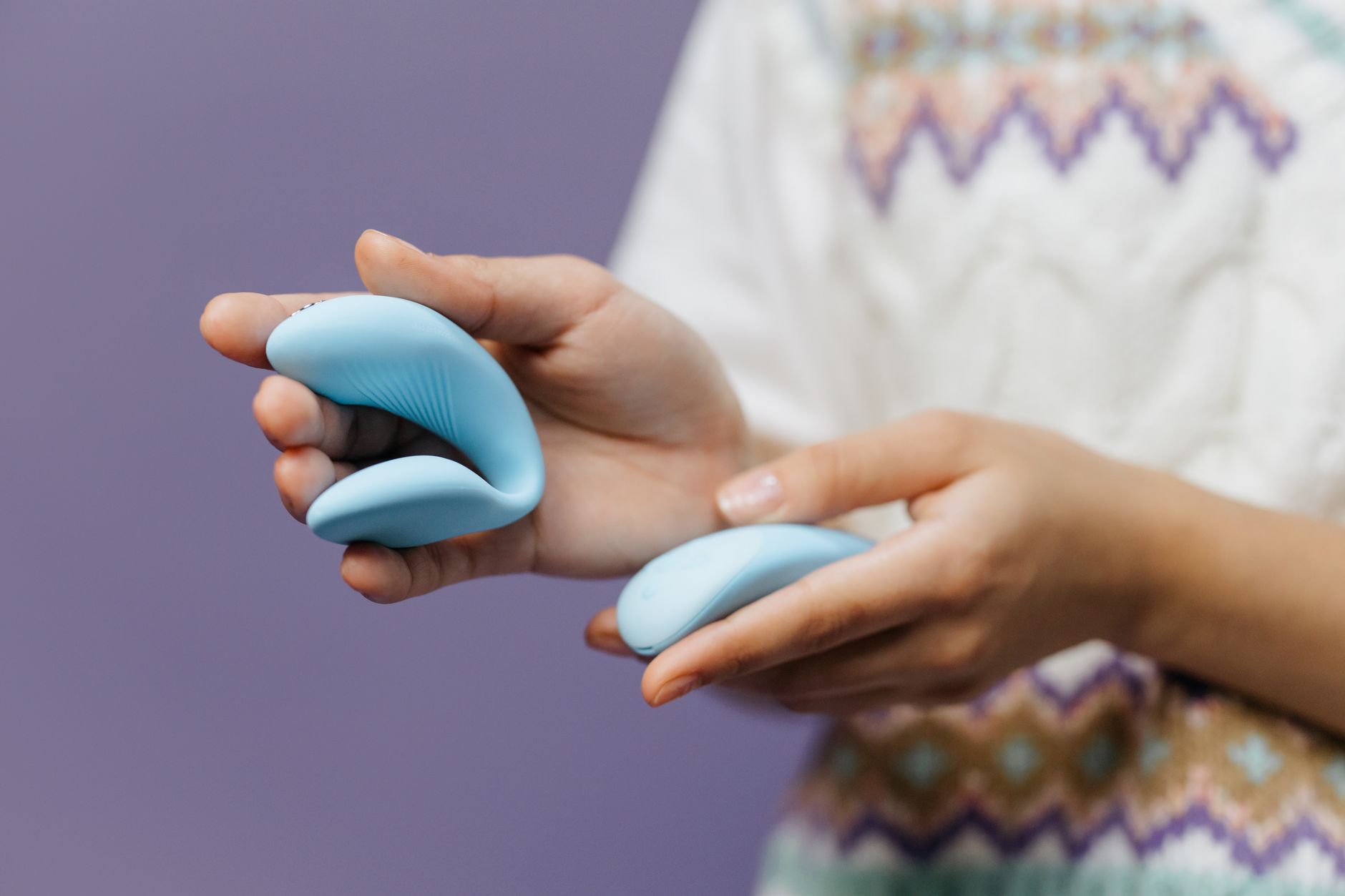
Photo by cottonbro studio on Pexels
What sensitivity actually means
Sensitivity isn't one thing. It's worth naming what yours might be.
Nerve sensitivity: Your clitoris has an unusually high concentration of nerve endings, so even light stimulation registers as strong. This is sometimes genetic, sometimes from hormonal changes, sometimes from medication.
Tissue sensitivity: Your tissue is thinner, more reactive, or recovering from injury. This could be post-surgical, post-delivery, or related to conditions like lichen sclerosus.
Psychological sensitivity: You're anxious about pain or overstimulation, which makes you guard against sensation even when tissue isn't actually sensitive. This one is real and responds to a feeling of control, which suction toys provide.
Pattern sensitivity: You're fine with some types of sensation but not others. You might tolerate steady pressure but hate vibration, or vice versa.
Lemon vibrators help across all four categories, but especially the last three. If your sensitivity is purely anatomical, a suction toy might help slightly but won't solve everything. If your sensitivity includes any element of overwhelm, anxiety, or pattern preference, a switch to suction-based stimulation often changes everything.
How to use a lemon vibrator if you're sensitive
Four practical steps that work for most people.
Step one: start without suction activated. Just hold the toy against your skin for a few seconds. Let your tissue adjust to the feeling of contact itself. If even that feels intense, you might need to warm up longer or use extra lubrication.
Step two: activate at the lowest setting. Many lemon sexual toys have multiple intensity levels. Start at pattern one. This is not wasting time. This is meeting your body where it is.
Step three: control depth. Don't push the opening fully onto your tissue. Let just the edges brush against you. You control how much sensation you receive. This is the opposite of traditional vibrators, where contact is basically binary. On or off. Here you have a spectrum.
Step four: move slowly. Instead of holding it steady and waiting for climax, try moving it in small circles or short side-to-side motions. This distributes sensation and prevents the "stuck on one spot" overwhelm that happens with traditional toys.
A lot of sensitive people find they need 15 to 25 minutes with a lemon clitoral vibrator versus maybe 8 to 10 with a standard toy. That's not because suction is weaker. It's because your nervous system is processing a different signal, and that takes time to build into arousal and release.
When sensitivity means you might need other support too
If you're sensitive across the board, not just with toys, a suction vibrator alone won't fix it. You might benefit from a few other things running in parallel.
Water-based lubrication helps almost everyone with sensitivity, but especially people who feel sharp pain or rawness. The glide reduces friction. Warmth and arousal help too. You're not just using a toy. You're creating conditions where your nervous system feels safe to receive sensation. That means longer foreplay, maybe some sensation play that isn't sexual, breathing work that calms your nervous system.
If pain is involved, not just discomfort, that's worth discussing with a pelvic health specialist. Conditions like vulvodynia, vaginismus, or tissue scarring need professional attention. A lemon vibrator can complement treatment, but it shouldn't replace it.
The practical permission piece
Here's something I notice a lot. People with sensitive clits often feel guilty about needing a different kind of toy. They assume traditional vibrators are "supposed to" work and something is wrong with them if they don't.
That's not how bodies work. You don't have a broken preference. You have a preference. That preference is totally normal and totally worth respecting. Switching to a lemon vibrator isn't a workaround. It's listening to what your body actually enjoys instead of what you thought you were supposed to enjoy.
Your pleasure matters exactly as much as anyone else's. You're not less sensitive or weaker or less responsive. You're just different. And lemon vibrators were literally designed for exactly this difference.
Frequently asked questions
Can I use a lemon vibrator if I have vulvodynia or chronic pain?
Maybe, and it's worth testing gently with a professional's support. Vulvodynia is nerve pain that can make any direct contact feel unbearable. A lemon clitoral vibrator is gentler than traditional toys because of the suction mechanism, but it's not painless contact. If you have vulvodynia, start with the lowest setting, use plenty of lubrication, and give yourself permission to stop immediately if pain appears. You might also benefit from seeing a pelvic floor physical therapist who can guide toy use as part of treatment.
Will my sensitivity go away if I keep using a lemon vibrator?
Not necessarily, but tolerance often increases with consistent, gentle use. Your nervous system can learn that sensation is safe. Some people find that after a few months of regular suction play, they can tolerate slightly higher intensities than they could before. That said, you don't need to build tolerance to deserve pleasure. If sensitivity stays the same and you're happy with a Lem at level one, that's completely fine.
Is suction-based stimulation weaker than vibration?
No. Different, not weaker. Some people experience suction as stronger even though it feels gentler. The sensation is more concentrated in a different way. Once you find the right pattern and intensity for your body, a lemon vibrator can absolutely deliver intense orgasms. Many people report their strongest climaxes come from suction, not vibration.
What if a lemon vibrator still feels too intense?
A few options. One is to use it fully clothed or over underwear. That dampens sensation without eliminating it entirely. Another is to press it against the area around your clitoris rather than directly on it. The stimulation still reaches the nerves, but it's more diffused. You might also try a smaller toy, or one with fewer intensity levels so you're not tempted to jump to something too strong.
Can I use a lemon vibrator with a partner?
Absolutely. Some people with high sensitivity find it easier to have pleasure with a partner when they're in control of the toy. You can use a lemon vibrator on yourself while your partner is with you, or your partner can hold it if you both trust the pressure and pace. For sensitive people especially, knowing you can ask your partner to pause or adjust intensity is powerful.
Why do some traditional vibrators feel buzzy and sharp?
Most traditional vibrators use a motor that vibrates at 50 to 100 times per second (measured in Hz). That rapid buzzing is effective for many people but can feel sharp or overwhelming on sensitive tissue because it concentrates all that energy at one point. Suction-based toys pulse more slowly, typically 5 to 15 times per second, and distribute sensation across a wider area. That slower pulse and wider surface feel completely different to your nervous system.
The bottom line
Sensitivity isn't a limitation. It's information. It tells you what your body needs to feel good. Lemon vibrators were designed for exactly this scenario. They work with sensitive tissue instead of against it. The fact that you prefer them doesn't mean you're broken or less responsive. It means you know yourself well enough to ask for what actually works.
If you're ready to try a different approach, start with the gentlest setting and give yourself permission to explore slowly. Your pleasure deserves that care.