Here's what nobody tells you about partnered orgasms
You can reach orgasm solo without much trouble. But the moment a partner enters the picture, something shifts. Suddenly you're in your head. Suddenly it takes longer. Or suddenly it doesn't happen at all. And then the pressure builds because both of you know you can do it alone, so something feels broken when you can't do it with them.
Nothing is broken. This is genuinely one of the most common patterns I see in couples work, and it's almost always fixable once you understand what's actually happening physiologically and emotionally.
Why partnered orgasms feel different (and harder)
There are three layers to this. The first is physiological. When you're alone, your body knows exactly what it wants. Your nervous system is regulated. Your attention is completely on sensation. With a partner present, your brain is split between your own pleasure and reading their body, managing their pleasure, timing, performance anxiety. That's a real neurological shift. Your parasympathetic nervous system (the one that drives orgasm) actually downregulates when you're monitoring another person.
The second layer is psychological. Vulnerability looks different with a witness. You might be unconsciously holding back because you don't want to make certain sounds, movements, or faces. You might be worried you're taking too long. You might be managing their ego or their pleasure as a priority over your own. That's not a problem you can think your way out of. It's a nervous system patterning that requires a different approach.
The third layer is purely mechanical. Your hand, your toy, or your partner's hand or body can't replicate the exact pattern and pressure you've trained your body to respond to. When you use lemon sexual toys solo, you know the sweet spot. You know the rhythm. With a partner, even if they're genuinely trying, the sensation profile is different. It's not wrong. It's just different.

Photo by Enric Cruz López on Pexels
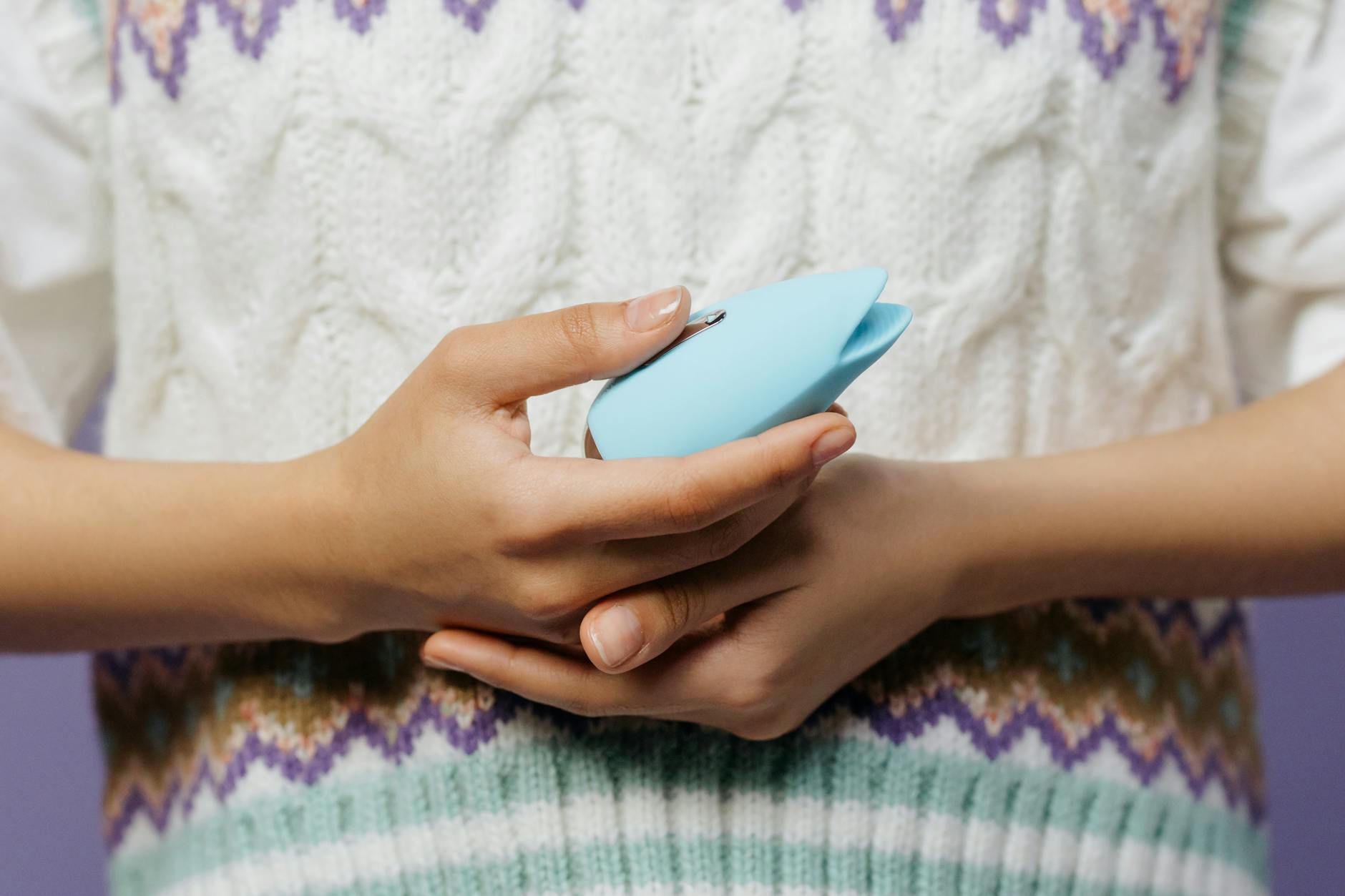
What makes lemon vibrators different in partnered situations
Lemon clitoral vibrators work differently than traditional vibrators when you're with a partner, and the difference matters. The suction-based technology means the sensation is less reliant on direct friction that requires precise repositioning. A partner doesn't need to find the exact angle. The suction pattern itself creates consistency.
Second, the speed and intensity profile of lemon toys means you can use them at lower intensities than you might expect. You can start at patterns 2 or 3, which feels less isolating during partnered sex. It doesn't dominate the experience. You can build with your partner rather than feeling like you're off doing your own thing.
Third, and this matters more than people realize, using a lemon vibrator during sex with a partner changes the narrative you're telling yourself. Instead of "I can't come with them," the story becomes "We're using a tool together." That psychological shift is huge. You're not broken. You're innovating. That reframe alone reduces performance pressure.
How to actually introduce a lemon vibrator into partnered sex
The timing and framing matter more than the mechanics. Don't spring it on a partner mid-sex. Have a conversation first. Not a therapy conversation. A simple one: "I've been thinking about trying something that might help me feel more pleasure when we're together. Would you be open to that?"
Most partners say yes because they want you to feel good. But even if there's initial hesitation, the conversation is the gateway. You're not asking permission. You're inviting them into something that serves both of you.
Start by using the lemon toy during foreplay while your partner is touching you elsewhere. Your partner might use their mouth or hands on other areas while you use the vibrator on your clitoris. This removes the pressure to coordinate. You're managing one thing. They're managing another.
The second time, try it during penetration if that's part of your sex life. This is where lemon vibrators genuinely shine because the suction-based design sits nicely above the clitoris and doesn't get in the way. You're adding direct clitoral stimulation to an activity that might not naturally provide it.
If orgasm still doesn't happen, that's fine. The goal isn't to force an orgasm. The goal is to reduce the pressure and pleasure yourself in front of your partner. That's vulnerable and hot, and it often shifts what's possible.
The communication piece (which is actually the whole piece)
I need to be direct here because this is where most couples get stuck. If you're having trouble reaching orgasm with a partner, the lemon vibrator is a tool, but the real work is the conversation.
Tell your partner what feels good. Tell them if you need slower or faster. Tell them if you need them to stay still or move. Tell them if you need to focus internally and don't want to make eye contact right now. This feels vulnerable because vulnerability is the requirement here, not the obstacle.
Likewise, if your partner is bringing you a lemon vibrator because they want to help, receive that as the gift it is. It's not a reflection on them. It's an optimization of pleasure. Most secure partners actually find it relieving. It takes the pressure off their body to be everything.

Photo by cottonbro studio on Pexels
Why lemon toys specifically help this scenario
Lemon clitoral vibrators are built for this kind of integration because the suction technology creates a sealed sensation that doesn't require constant repositioning. You're not chasing the perfect angle. The device does that for you. That's the mechanical advantage.
But the real advantage is psychological. Using a lem vibrator during partnered sex signals that you're taking your own pleasure seriously. You're not making your partner responsible for your orgasm. You're collaborating. That's genuinely sexy, and it often leads to better sex for both of you because the pressure lifts.
Many couples also find that once they introduce lemon adult toys into their sex life, they start experimenting with other things. The tool itself opens a conversation. The conversation opens possibilities.
When this needs more than a vibrator
If you're consistently unable to orgasm with a partner even with tools and communication, there might be something else worth exploring. Sometimes it's medication side effects. Sometimes it's deeper anxiety or trauma that needs actual therapeutic work, not a better vibrator. Sometimes it's a mismatch in desire or connection that no toy can fix.
A good therapist who specializes in sex and relationships can help you sort out which category you're in. The goal isn't to force an orgasm into existence. The goal is to understand what's blocking you and whether it's mechanical, neurological, relational, or psychological. Usually it's a combination.
But for most people, lemon vibrators genuinely do shift what's possible. Because they remove one variable (the mechanics of stimulation) so you can focus on the other variables (relaxation, pleasure, vulnerability, connection).
FAQ: Trouble reaching orgasm with partners
Why can I orgasm alone but not with a partner?
Your nervous system behaves differently when you're alone versus with a witness. Alone, your parasympathetic nervous system (the one that drives orgasm) can fully activate. With a partner, even someone you love and trust, your brain is divided between your pleasure and monitoring theirs. That split attention is neurologically real and incredibly common. It doesn't mean anything is wrong with you or your relationship.
Can a lemon vibrator really change what's possible during partnered sex?
Yes, for most people. The mechanism is partly mechanical (the consistent sensation profile) and partly psychological (the permission and reduced pressure that comes with using a tool). When you're not trying to make your partner's body replicate what your hand or a toy does solo, you can actually relax. Relaxation is the gateway to orgasm.
My partner thinks I need a vibrator because they're not good enough.
This is a common worry, and it's worth talking through. The honest answer is that a vibrator isn't a replacement for a partner. It's a tool that provides a specific kind of stimulation that hands and bodies don't naturally provide. Your partner probably wants you to experience pleasure. Framing the vibrator as collaboration rather than criticism usually helps. You could say something like, "This isn't about you. This is about me knowing what works for my body and wanting to share that with you."
Does using a vibrator during partnered sex make the experience feel impersonal?
Not for most people. Many couples find the opposite. When you remove the pressure to make orgasm happen through partnered stimulation alone, you can actually be more present and connected. You're not in your head about whether it's going to happen. You're actually there with your partner.
How long should I wait before trying this if I've never mentioned it?
Start the conversation before you try anything during sex. You don't need a long lead time. A simple conversation a day or two beforehand works. Something like, "I've been thinking about trying a vibrator during sex. Would you be interested in that?" takes five minutes and removes so much potential awkwardness.
What if I still can't orgasm even with a lemon vibrator and a supportive partner?
Then it's worth exploring whether something else is at play. Medication, stress, hormone levels, trauma, anxiety, or underlying relationship dynamics can all affect orgasm capacity. A sex-positive therapist can help you figure out which variable is the limiting factor. A vibrator is a tool, not a solution to every barrier.
The real fix for trouble reaching orgasm with a partner isn't actually about the vibrator. It's about permission. Permission to prioritize your own pleasure. Permission to be vulnerable and ask for what you need. Permission to use a tool that works for your body. Once you give yourself that permission, most of the rest follows. Lemon clitoral vibrators just make that permission tangible.
If you're ready to experiment with this, start with the conversation. Your partner probably wants to hear it. And if you have questions about which lemon toy might work best for your situation, we're here. Reach out anytime.