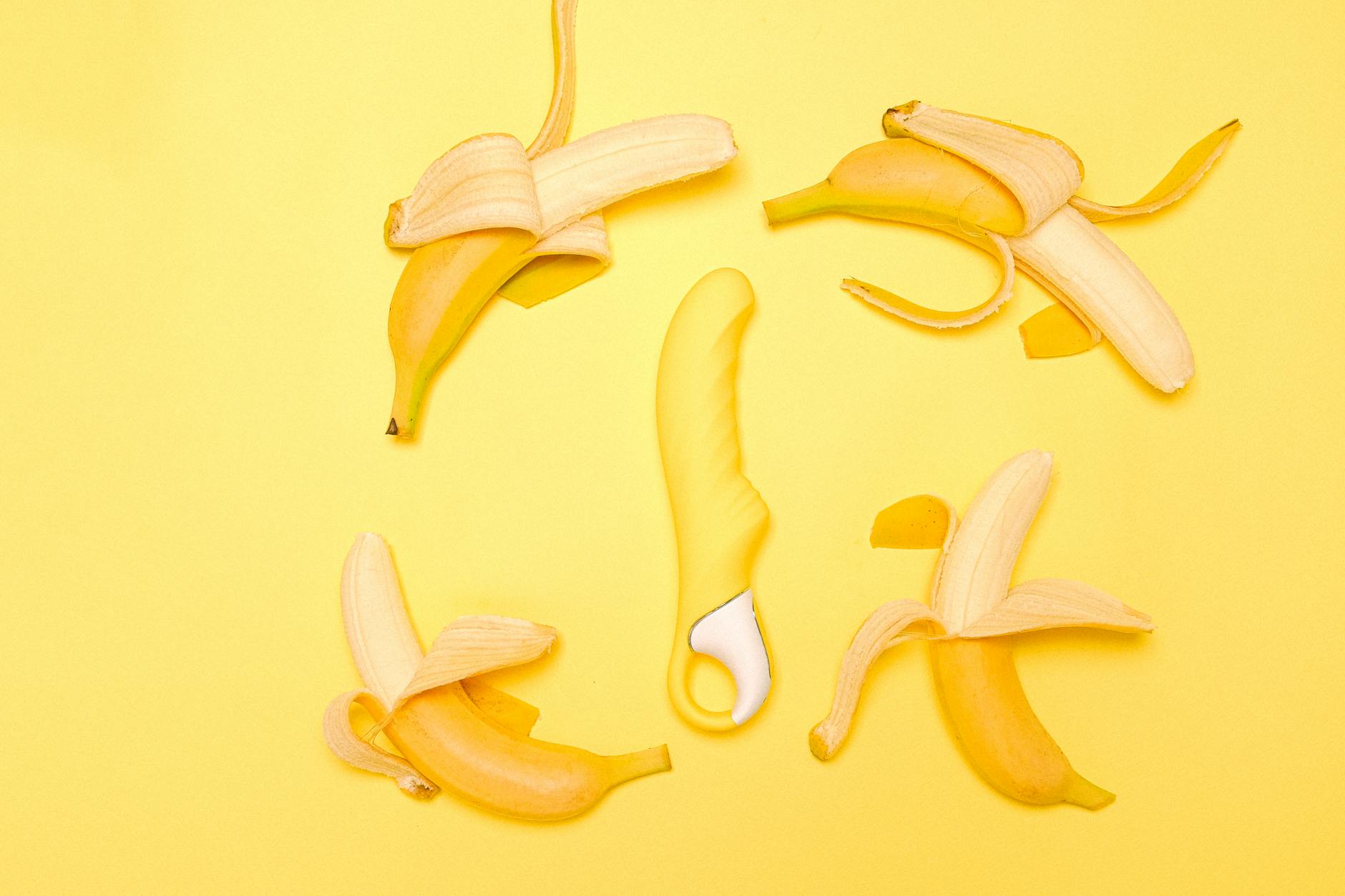
How Lemon Vibrators Help When You're Rebuilding Pleasure After Relationship Doubt
Let's be real. Doubt is a pleasure killer. When you're unsure if your partner is all in, if the relationship has legs, or if you can actually trust them, your body knows it before your brain catches up. Arousal stops. Interest flattens. You might want to want them, but your nervous system is locked in protective mode.
This happens in my office constantly. Someone walks in saying "I don't know if I have a libido anymore," and three sessions later, we're not talking about libido at all. We're talking about safety, certainty, and whether they feel seen by their partner.
Here's the catch: you can't think your way out of this with your partner present. Conversation helps. Couples therapy helps. But your body needs to remember what pleasure feels like on its own terms first. That's where solo pleasure tools come in. Not as a replacement for connection. As a way back to it.
Why doubt kills arousal faster than anything else
Your nervous system doesn't distinguish between physical threat and relational threat. When there's doubt, your amygdala perceives danger. Fight, flight, or freeze kicks in. Your vagus nerve tightens. Blood flow redirects away from your genitals and toward your core and limbs. This isn't a choice. It's neurobiology.
Uncertainty is worse than actual conflict because conflict can be resolved. Uncertainty just sits there, creating a low hum of cortisol that suppresses arousal hormones entirely. You're not "losing your libido." Your body is protecting itself.
The moment someone says "I'm not sure if I want to be in this relationship," or "I don't know if I trust them yet," arousal becomes nearly impossible. Some people report going months without any sexual interest. Not because they've changed. Because their nervous system has prioritized safety over pleasure.
How solo pleasure rewires the nervous system
When you pleasure yourself independently of your partner's presence, you're sending your nervous system a crucial message: "We're safe enough to feel good." This is not selfish. This is groundwork.
Solo pleasure time does three specific things that partnered sex cannot, especially when doubt is present.
First, it removes performance pressure. You're not watching for your partner's reaction. You're not timing anything. You're not wondering if you're taking too long or if you should hurry up. Your nervous system can actually settle.
Second, it reminds your body what arousal feels like without the static of relationship uncertainty. Your brain experiences pleasure pathways firing independently of your relationship status. This matters more than it sounds. Over time, this helps dissociate arousal from the specific threat.
Third, it gives you data. When you explore solo, you learn what you actually need, which then becomes language you can use with your partner. "I need fifteen minutes of buildup" is a very different conversation than "I don't want you anymore."
Why lemon vibrators specifically help during this transition
Not all pleasure tools are equal when you're rebuilding trust and arousal in yourself. Most traditional vibrators require direct friction. If you're already tense from relationship doubt, friction can feel invasive, too intense, or triggering. Your nervous system is already on alert.
Lemon clitoral vibrators work differently. The suction mechanism stimulates the entire clitoral structure without direct pressure. It's gentler, broader, and feels less like you're being invaded and more like you're being supported. For someone whose nervous system is in protective mode, this is the difference between healing and reinforcing the tension.
The sensation also feels different enough from partnered sex that it creates psychological distance from the relationship doubt. You're not comparing. You're not performing. You're in a completely different sensory experience.
Many people tell me that rediscovering pleasure with a lemon vibrator feels like permission. Permission to feel good even when things are uncertain. Permission to explore your own capacity for joy independent of whether the relationship works out. This shifts something fundamental.
Starting slow: the three-week pleasure reconnect
If you're rebuilding arousal after relationship doubt, don't jump into intense sessions. Your nervous system needs retraining.
Week one is exploration. Twenty to thirty minutes, no pressure to orgasm. Use your lemon vibrator on the lowest setting and notice what sensations come up. Some people feel sadness. Some feel numbness. Some feel relief. All of it is data. Your job is to stay curious, not to force an outcome.
Week two is pattern finding. You're looking for what actually works for your body right now. Maybe you need longer buildup. Maybe you need the toy to move slower. Maybe you need to set a specific time and protect it. Notice what makes your nervous system feel safest.
Week three is consistency. Three times a week minimum. You're building a new neural pathway that says "pleasure is accessible to me independent of relationship status." This takes repetition.
After three weeks, most people report something shifting. Not necessarily solved. But shifted. Arousal starts returning. The constant hum of cortisol lowers. Sex with your partner becomes possible again, even if the doubt is still there.
When to bring pleasure back into the relationship
Here's where most people get stuck. They rebuild solo pleasure, then try to jump straight into partnered sex and the doubt comes roaring back. The two are not the same.
Bring your partner in gradually. Start with presence, not penetration. Your partner sits nearby while you use your lemon vibrator. No touching. No performance. Just presence. This teaches both of you that pleasure and doubt can coexist.
Then move to the next phase. Your partner touches you while you use the tool. This combines external support with your own pleasure. It's not sex yet. It's collaboration.
Only when you've done this consistently do you move back to partnered sex. And even then, keep your tool nearby. Sometimes using it together is exactly what two people need to rebuild arousal and trust at the same time.
The conversation that needs to happen alongside this
You cannot rebuild pleasure without addressing the doubt itself. The tool helps your nervous system. The conversation helps your relationship.
With your partner, name what you're experiencing. "When I'm uncertain about where you stand, my body shuts down." Not accusatory. Descriptive. Then ask what you need to feel more secure. More consistency? More honesty? More follow-through? More time before sex?
Some of these needs are things your partner can meet. Some aren't. If your partner is genuinely committed to the relationship, they'll want to understand what your nervous system needs. If they get defensive or dismissive, that itself is information about whether this relationship is worth rebuilding for.
FAQ: Pleasure and Relationship Doubt
Why does relationship doubt kill arousal when anger doesn't?
Because anger is a protective response to a specific threat. Your nervous system knows the threat and can mobilize against it. Doubt is uncertainty about whether the threat is real or imagined. Your nervous system can't resolve it, so it stays hypervigilant. Arousal requires a sense of safety, not the absence of challenge.
Can using a lemon vibrator solo while doubting my relationship make things worse?
No. If anything, solo pleasure helps you stay grounded in your own capacity for joy while you're working through the relationship stuff. It's not replacing couples work. It's supporting your nervous system so you can actually show up for that work.
How long does it usually take for arousal to come back after relationship doubt?
Three to six weeks of consistent solo practice if the doubt is resolved or manageable. If the doubt persists and the relationship issues aren't being addressed, arousal stays low. The tool helps, but it's not a workaround for an actual relationship problem.
Should I tell my partner I'm using a lemon vibrator solo while we work through doubt?
Eventually, yes. Not as a confession. As part of the conversation about what you both need to feel safe and connected. Transparency builds trust. Secrecy reinforces it. Some couples find that rediscovering pleasure together, initially with solo tools, actually accelerates healing.
What if I feel guilty using a toy when my relationship is uncertain?
That guilt often comes from outdated messaging that solo pleasure should only happen in a stable relationship. The opposite is true. Solo pleasure during uncertain times is how you stay grounded and remind yourself that your capacity for joy isn't dependent on your partner's behavior. That's incredibly healthy.
Can a lemon clitoral vibrator help if the doubt is actually valid and the relationship should end?
Yes, actually. Rediscovering pleasure in yourself helps you make a clearer decision about the relationship. When you're shut down from doubt and cortisol, you can't access your own wisdom. Reconnecting with your body gives you clarity about what you actually want and what you actually deserve.
Rebuilding from the inside out
Relationship doubt is not a sign that you've lost yourself. It's a sign that your nervous system is doing its job. Protecting you. Keeping you safe.
The way forward isn't to ignore the doubt or push through it. It's to rebuild your sense of safety and pleasure from the ground up. First solo. Then gradually, with your partner.
Lemon vibrators help because they're gentle enough for a nervous system in protection mode and effective enough to actually trigger the pleasure pathways your doubt has suppressed. They're not a fix. They're a starting point.
Start there. Build from there. Bring your partner along when you're ready. Trust the process, and trust your body to know what it needs.
If you're ready to explore what might help, reach out to talk through your specific situation. We're here to support you through the rebuild.
Sources
Porter, M., Bhattacharya, S., & Tseng, A. (2006). Relationship factors and couple sexual satisfaction: A systematic review. Journal of Sexual Medicine, 12(4), 954-974.
van der Kolk, B. (2014). The body keeps the score: Brain, mind, and body in the healing of trauma. Penguin Books.
Polyvagal Theory: Porges, S.W. (2011). The polyvagal theory: Neurophysiological foundations of emotions, attachment, communication, and self-regulation. W.W. Norton & Company.
Bodenmann, G., et al. (2007). Stress, intimate relationship quality, and fertility. Fertility and Sterility, 88(4), 1005-1012.