Here's what nobody tells you about pleasure after trauma
After betrayal or abuse, your body becomes unfamiliar territory. Touch that once felt good now triggers a flinch. Arousal feels suspect. You're not broken. You're protecting yourself, and that's actually intelligent.
But eventually, if you want to reclaim that part of yourself, you need a way back in. Not through forcing it. Through control.
Why lemon vibrators are different after trauma
Most vibrators hand pleasure off to someone else's rhythm. You turn it on, and then it's in charge. After trauma, that loss of control is the problem.
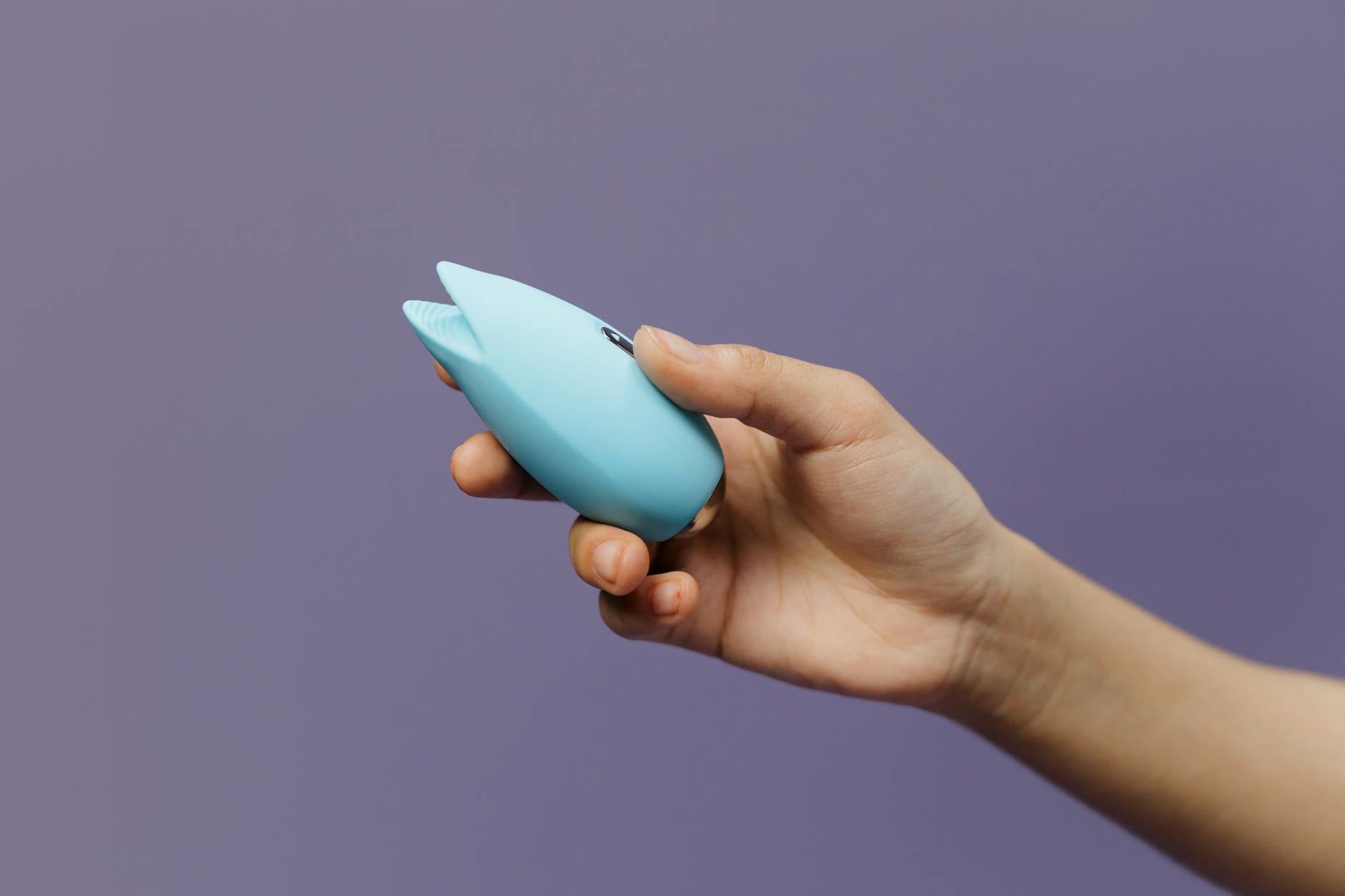
Lemon clitoral vibrators work differently. The suction mechanism responds to your body in real time. You're not chasing a preset pattern. The device is following you. That inversion of control is where the real healing starts.
Here's why this matters clinically. After relational trauma, the nervous system learns that loss of agency equals danger. Solo pleasure with a tool you fully command helps rewire that connection. You're rebuilding the association between sensation and safety.
The role of sensation progression
One of the biggest mistakes I see is moving too fast. Trauma survivors often either shut down completely or swing into intensity as a way to feel "normal" again. Both backfire.
With a lemon vibrator, you can start at the gentlest setting. Pattern 1. The first time, maybe just hold it next to your skin without turning it on. The second time, activate it at the lowest level for five seconds. Then stop. You're teaching your nervous system that sensation can start and stop on your terms.
This isn't subtle. In clinical terms, you're creating what's called "titrated exposure." Each session, your window of tolerance expands slightly. Your body learns that pleasure doesn't have to be overwhelming or taken from you.
Rebuilding the mind-body connection
Trauma fragments that connection. You might feel disconnected from your body entirely, or present in some parts and numb in others. Pleasure can't happen in fragments.
Lemon vibrators, because they offer such precise, responsive stimulation, help you locate sensation again. You might find that you feel more at the base of the clitoris, or that suction touches something that vibration never reached. That's not failure. That's data. You're remapping yourself.
One client I worked with after intimate partner violence described it as "remembering where I live." She started sessions by just noticing sensation without expectation of orgasm. The vibrator became a way to get reacquainted with her own body as a neutral, non-sexual space first. Pleasure returned later, but safety came first.
Pacing and patience as non-negotiable
Here's the hard truth. If you're recovering from relationship trauma, there will be sessions where you start and need to stop. Where something triggers without warning. Where pleasure feels impossible or even unwanted.
That's not a setback. That's information.
With lemon vibrators, the simplicity of the device means you can pause without guilt or complexity. You're not struggling with multiple buttons or feeling like you're "doing it wrong." The tool is so intuitive that when you need to stop, you just stop. No shame machinery attached.
I recommend scheduling pleasure sessions the way you'd schedule therapy. Not spontaneous. Bounded. "On Tuesday at 7 p.m., I have permission to explore sensation for 15 minutes." The structure matters. Your nervous system needs to know this is safe time, not an ambush.
Why partner presence isn't always the answer
If you're in a relationship, there's often pressure to "get back to normal" sexually with your partner. Sometimes that's healing. Sometimes that's retraumatizing.
Solo exploration with a clitoral vibrator from Lemon Clit Store gives you space to reclaim pleasure as yours first. Not for anyone else. Not to prove anything. Just for the sake of feeling good on your own terms.
If you do eventually want to bring a partner back in, starting solo means you know what works, what your boundaries are, and what you actually want. You're not negotiating from a place of deficit.
The neuroscience of control
When you use a device you fully command, your prefrontal cortex is engaged. That's the part of your brain responsible for rational thought, safety evaluation, and decision-making. Meanwhile, your amygdala, which stores trauma responses, gets quieter.
With a partner, even a trusted partner, your amygdala stays on alert. You're monitoring their movements, their expressions, their intentions. That's not a character flaw. That's survival.
But alone, with a simple, responsive tool, your brain can actually relax into the experience. The suction sensation of a lemon vibrator is also grounding in a specific way. It's localized, intense, and consistent. Not disorienting.
Healing pleasure isn't about intensity. It's about knowing, moment to moment, that you're in charge.
What happens when arousal feels wrong
Some trauma survivors report that arousal itself triggers anxiety. The physical sensations of blood flow, heart rate increase, and muscle tension feel too close to panic. Your body learned to confuse them.
Lemon clitoral vibrators are gentle enough to let arousal build slowly without overwhelming your system. The suction creates sensation that's pleasurable but doesn't require the same cardiovascular intensity as penetration or partner-based stimulation. You can practice feeling aroused while staying in your window of tolerance.
This is what I call "practicing wellness." You're training your nervous system that arousal can be safe, bounded, and entirely under your control.
When to bring a professional in
If you're working with a trauma-informed therapist, bring this conversation there. Your pleasure practice is part of your healing, not separate from it. A good therapist will support solo exploration as part of your recovery without pressure to move faster than feels right.
If you're having intrusive memories, dissociation, or panic during solo sessions, pause and talk to someone. A lemon vibrator is a tool, not a cure. Trauma requires proper support.
FAQ
What if using any toy triggers me?
That's valid and common. Start smaller. Some people benefit from non-electronic touch first. Hands, feathers, ice. If you want to return to toys later, that's always available. There's no timeline.
Can I use a lemon vibrator with a partner after trauma recovery?
Absolutely. Many couples find that introducing a tool the survivor is already comfortable with creates safety. You already know how it feels and responds. Your partner becomes the person you're choosing to include, not the person controlling the experience.
How long does it take to rebuild pleasure after trauma?
It varies widely. I've had clients feel significant shifts in weeks of consistent practice. Others take months or years. Healing isn't linear. What matters is that each session, you're gathering evidence that pleasure can be safe and yours.
Should I feel guilty about preferring solo pleasure to partnered sex?
No. Reclaiming your own pleasure is your body healing. If you need solo space indefinitely, that's okay. If it's a stepping stone, that's okay too. The goal isn't to get back to "normal." It's to get to something that actually works for you.
What if I don't want penetration or partner involvement again?
Your pleasure is not obligated to look like anyone else's. Clitoral pleasure alone is complete, powerful, and fully valid. A lemon clitoral vibrator can be the entirety of your sexual life if that's what you choose.
How do I know if I'm healing or just going through the motions?
Healing includes moments where sensation actually feels good, not just tolerable. Where you're curious instead of dutiful. These moments might be brief at first. Notice them. That's the signal that your nervous system is beginning to trust again.
Moving forward
Recovering from relationship trauma is not about erasing what happened or forcing yourself back into pleasure on anyone else's timeline. It's about slowly, deliberately reclaiming your own body as a space of safety and choice.
A lemon vibrator is a tool for that work, not the work itself. But it's a good tool because it puts control in the right place. Your hands. Your pace. Your choice.
If you're starting this journey and need support beyond what a toy can offer, reach out to a trauma-informed therapist or counselor. Your healing matters, and you don't have to do it alone.