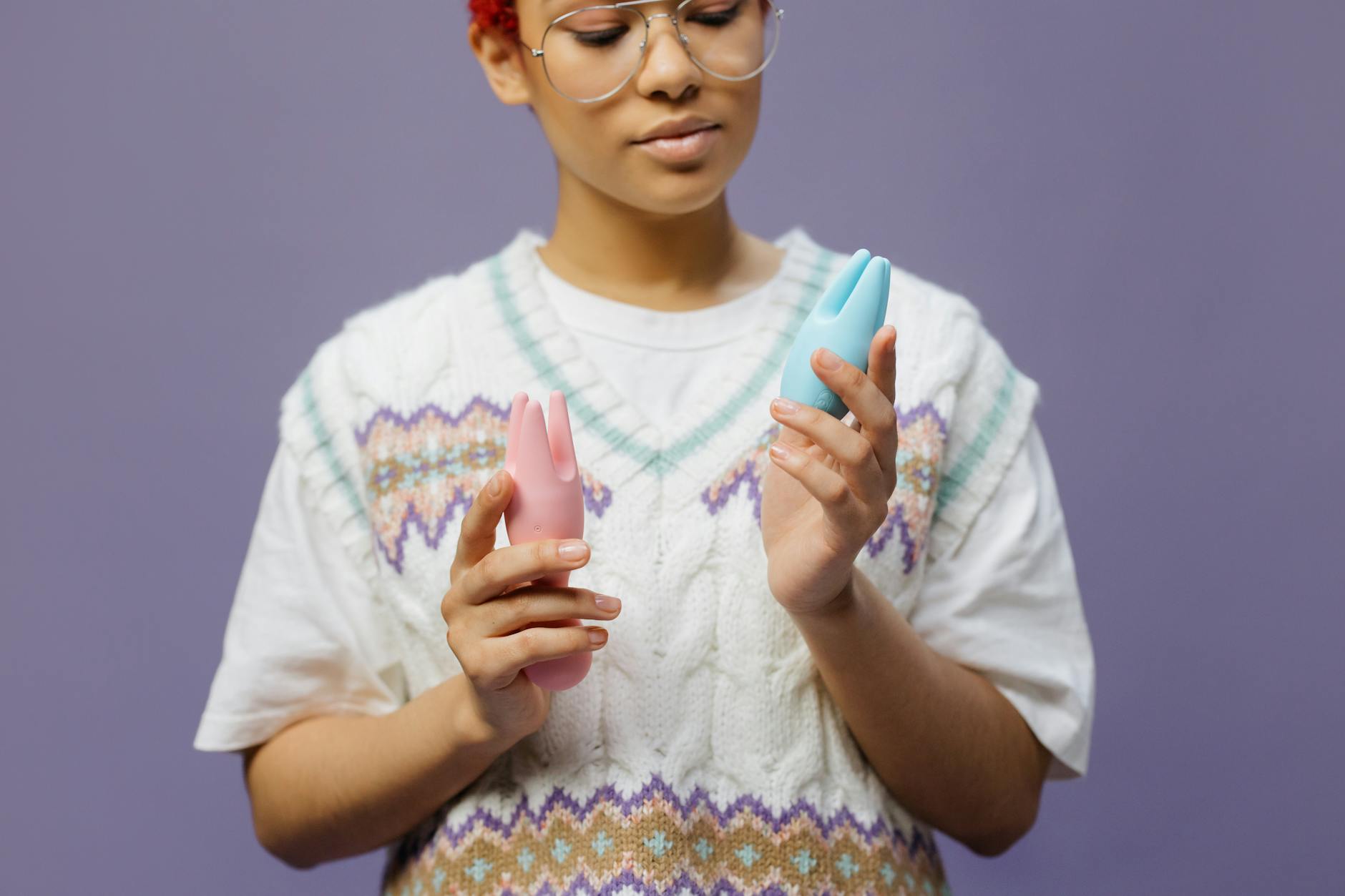
Let's talk about the cycle nobody maps
Here's the thing: most of what you've read about pleasure and menstrual cycles assumes a cis woman with a 28-day cycle and predictable timing. Real bodies are messier. But the underlying neurology is consistent enough that understanding it changes how you use lemon vibrators, and honestly, how much you enjoy them.
Your menstrual cycle doesn't just affect hormones. It rewires how your clitoris responds to stimulation. A lemon clitoral vibrator that feels perfect on day 10 might feel completely different on day 21. Knowing why takes the guesswork out of "Why does this not feel as good today?"
What happens to your body before your period
The luteal phase, which starts after ovulation, brings a cascade of hormonal changes. Progesterone rises. Estrogen fluctuates. Your basal body temperature climbs. All of this affects blood flow to your genitals, nerve sensitivity, and how quickly arousal builds.
In the follicular phase (days 1-14 of a typical cycle), estrogen is on the rise. Clitoral tissue gets fuller. Blood flow increases. Your nervous system is primed for quick arousal. A lemon vibrator on pattern 1 might feel instantly satisfying.
In the luteal phase (days 15-28), progesterone dominates. This hormone is calming, grounding. It's the neurochemical opposite of the pre-ovulatory energy. Your clitoris doesn't engorge the same way. It takes longer to feel ready. The sensation can feel duller or require more intensity to register.
This is not dysfunction. This is your body literally changing what it needs.
Why the intensity feels different before your period
Three mechanisms drive this change.
Reduced clitoral engorgement. In the follicular phase, higher estrogen means more blood flow to genital tissue. Your clitoris gets fuller, almost plumped with blood. In the luteal phase, progesterone works against this. The tissue is less engorged. Vibration travels differently through less-filled tissue. It can feel less direct, less intense.
Slower arousal cascade. Progesterone is a central nervous system depressant (in the clinical sense, not the mood sense). It slows neural firing. Your brain takes longer to register pleasure signals from your clitoris. That means you might need 15-20 minutes of warm-up instead of 5. And the pattern that usually finishes the job might need to be one or two levels higher.
Changed pain-pleasure ratio. This one surprises people. Many report that in the luteal phase, what would normally feel perfect instead feels sharp or overstimulated. This is real. Progesterone makes the nervous system more sensitive to painful stimuli while making it less sensitive to pleasurable ones. It's an evolutionary trade-off. If you're pregnant, you don't want random sensations distracting from survival signals.
How to adjust your lemon vibrator technique
Four practical shifts that work for most people with luteal-phase sensitivity changes.
Give yourself more warm-up time. I'm not talking about foreplay theater here. I mean actual physical preparation. Fifteen to twenty minutes of light touch, using a lower intensity setting on your lemon vibrator, or switching to a different toy like a wand for initial stimulation. Your nervous system needs time to catch up to what your mind wants.
Start one intensity level lower than usual. If you typically use pattern 4 on a lemon vibrator, try starting at pattern 3. You're not losing pleasure. You're meeting your body where it actually is. You can always increase if you need to.
Switch patterns more. In the follicular phase, one pattern often does the entire job. In the luteal phase, rotating between two or three patterns (maybe 30 seconds each) can feel more interesting and keep your nervous system engaged. Your clitoris gets bored faster when progesterone is high.
Use lubrication even if you don't usually need it. Progesterone suppresses natural lubrication. Water-based lube isn't a sign something's wrong. It changes the glide of a lemon vibrator from sharp vibration to smoother, more diffused sensation. Many people find this actually feels better in the luteal phase.
The emotional layer nobody mentions
Hormones affect mood and how you relate to pleasure, not just sensation. In the luteal phase, many people are more anxious, more critical of their own experience, more easily distracted. You might reach for a lemon vibrator thinking "This should feel amazing" and then feel disappointed when it doesn't match yesterday's experience.
The fix isn't to feel better about it. It's to expect it. Track when you use your toy and how it felt. After two or three cycles, patterns emerge. You'll see that days 20-24 are different from days 15-19. Once you know that, disappointment stops masquerading as dysfunction.
Partner sex is affected too. Many people experience lower desire in the luteal phase. This isn't low libido. It's just a different kind of responsive pleasure. If you're using a lemon vibrator with a partner, the same warm-up rules apply. Tell them: "I need more time and different intensity today. That's not about you." It separates the logistics from the relationship.
When progesterone changes mean something else
If your cycle is irregular or unpredictable, tracking sensation with a lemon vibrator can actually help. Some people have PCOS, which means estrogen and progesterone never settle into a rhythm. Others have luteal phase defect, where progesterone doesn't rise enough. You might notice that your clitoris never feels as responsive as it should, cycle-wide.
That's worth mentioning to a gynecologist. Not because something is broken, but because if progesterone is consistently low, it affects mood, energy, and yes, pleasure. Supplementation or lifestyle changes can shift all three.
Similarly, if you've recently started hormonal birth control, expect a adjustment period of 2-3 months. Different methods (pills, IUDs, implants) have different hormone ratios. Your lemon vibrator might feel completely different on a pill that stabilizes estrogen and progesterone versus one that suppresses ovulation more aggressively.
The rhythm that matters most
Your menstrual cycle is a rhythm, not a bug in an otherwise stable system. Learning to work with it, instead of pushing against it, transforms how you experience your body and pleasure. A lemon vibrator is a tool. But the real skill is listening to what your body actually needs on any given day and giving yourself permission to shift without shame.
Some days you'll want intensity and speed. Other days you'll want softness and time. Both are normal. Both are you.
People also ask
Can you use a lemon vibrator during your period?
Yes. Menstruation itself doesn't make lemon vibrators unsafe. You might feel more bloated or sensitive, so start at a lower intensity. Cramping sometimes responds better to a massage pattern than a steady vibration. If you use a water-based lube (as you should with any vibrator), just clean up afterward. The clitoris is external, so menstrual flow doesn't affect safety.
Why does my lemon clitoral vibrator feel numb during my period?
Progesterone is still high in the first few days of menstruation (you're still technically in the luteal phase until about day 1-3). Combined with period cramps and pelvic congestion, your nervous system might feel disconnected from sensation. Try a wand vibrator or start with lower settings. Some people find pleasure during their period actually requires more direct, consistent stimulation than usual.
Does using a lemon vibrator affect your cycle?
No. Clitoral stimulation doesn't change hormone levels or the timing of your period. Orgasms release oxytocin and dopamine, but those aren't reproductive hormones. You can't vibrate yourself into or out of ovulation. If your cycle timing changes, it's due to stress, illness, medication, or genuine hormonal shifts, not toy use.
Should I avoid lemon vibrators during the luteal phase?
Not at all. You might just need to adjust how you use them. More warm-up time, slightly higher intensity settings, water-based lube, and rotating between patterns all help. The luteal phase is actually when many people discover deeper, more full-body pleasure if they give their nervous system what it actually needs.
Why does my clitoris feel oversensitive before my period?
This is the flip side of reduced engorgement. When tissue is less plumped with blood, vibration hits nerve endings more directly. It can feel sharp instead of diffuse. Try using a lower pattern, apply lubrication to soften the sensation, or switch to a toy with a broader surface area for a few days. Your sensitivity will shift back after menstruation begins.
Can hormonal birth control change how lemon vibrators feel?
Definitely. Methods that suppress ovulation flatten your hormone cycle, which means sensation stays more consistent month-to-month. Some people report that their clitoris feels duller overall on certain pills. IUDs are non-hormonal or release hormones directly to the uterus, so sensation usually doesn't change much. If you recently started birth control and lemon vibrators suddenly feel different, give it 2-3 months before deciding anything's wrong. Your body is adjusting.
The takeaway
Your menstrual cycle affects pleasure. That's not a flaw in the design. It's information. Once you understand what progesterone does to sensation, you can stop blaming yourself for "not being in the mood" or feeling disconnected from your clitoris. You're not broken. You're responding to chemistry.
A lemon vibrator is most enjoyable when you meet yourself where you actually are, not where you think you should be. Track a few cycles. Notice the patterns. Adjust your approach accordingly. That's not settling. That's mastery.
For more on how your body responds to stimulation across your cycle, check out our guide on why your lemon vibrator feels better during different parts of your cycle. And if anxiety is affecting your pleasure, we've covered why lemon clitoral vibrators feel better than suction toys if you have anxiety.
Questions? Get in touch.