Let's start with what nobody talks about
You had an orgasm. Great. Now what? If you've ever wondered why your lemon vibrator suddenly feels overwhelming, muted, or just completely different the moment after you climax, you're not experiencing a malfunction. You're experiencing neurology. Your body is doing exactly what it's supposed to do, and understanding that shift changes everything about how you use these tools.
Here's the thing: the post-orgasm window is not dead time. It's a active, measurable phase where your nervous system recalibrates. Touch sensitivity spikes, then drops. Clitoral engorgement begins to subside. Your vagus nerve shifts gears. And yes, your lemon clitoral vibrator will feel genuinely, noticeably different. The question is whether you know why, and what you want to do about it.
What happens neurologically after orgasm
During orgasm, your nervous system is in sympathetic overdrive. Your heart rate climbs. Your muscles contract rhythmically. Blood floods the clitoris and vaginal tissue. The sensation bandwidth is cranked all the way up.
The moment the orgasm ends, your parasympathetic nervous system takes over. This is the downshift. Your heart rate drops. Muscles relax. Blood gradually redistributes away from the pelvic floor. This phase lasts anywhere from a few seconds to several minutes, depending on your body, your arousal context, and whether you're alone or with a partner.
During this recovery window, two things happen simultaneously that affect how your lemon vibrator feels. First, the clitoris becomes extremely sensitive. Touching it directly can feel too sharp, almost uncomfortable. This is called post-orgasmic tenderness, and it's completely normal. Second, the overall sensation bandwidth narrows. Stimulation that felt perfect during arousal now feels either too intense or oddly muted.
Why lemon vibrators feel overstimulating after climax
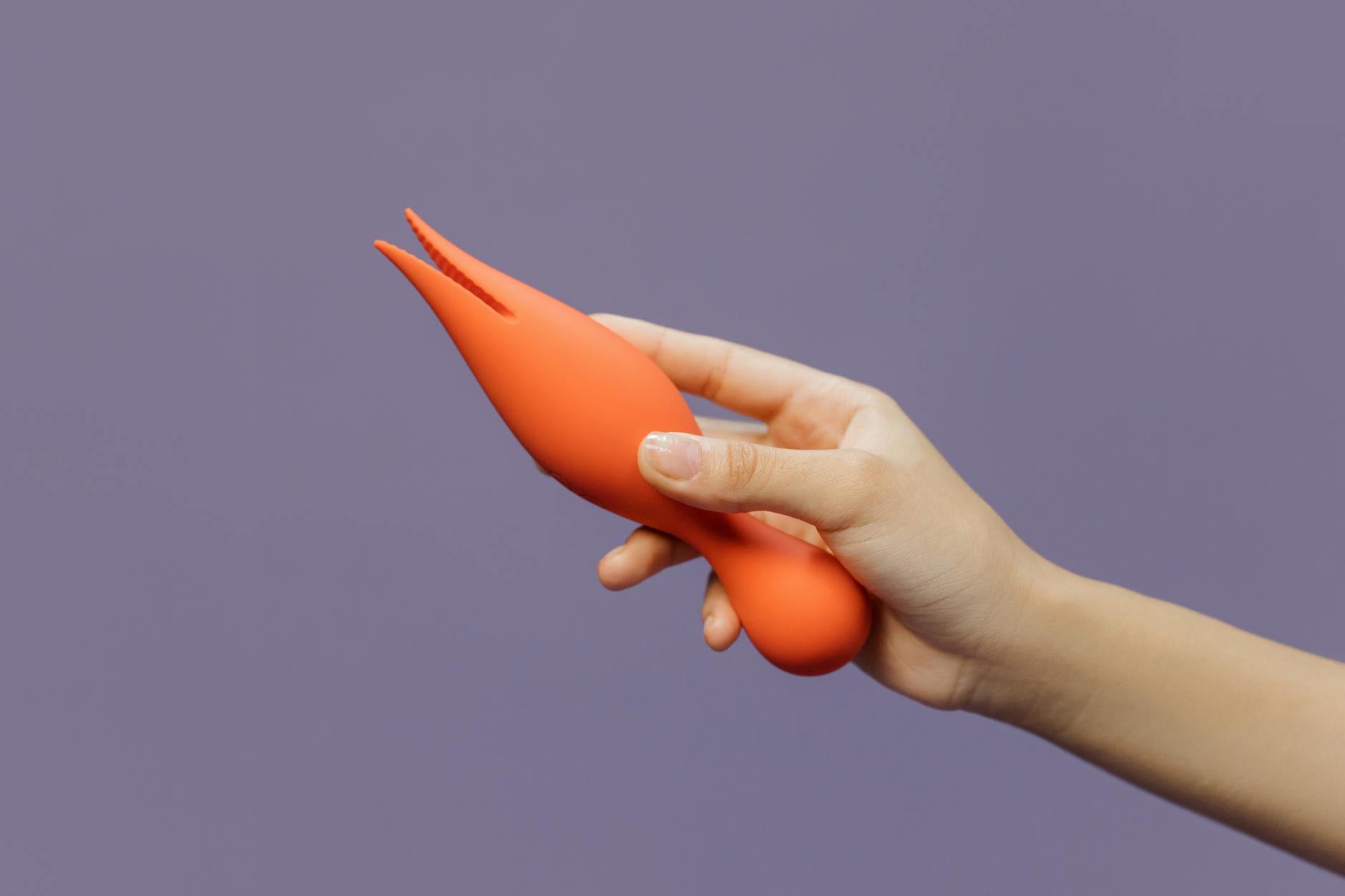
Lemon clitoral vibrators, including the Lem, work through targeted vibration and suction. During arousal, that specificity is a feature. After orgasm, it becomes a liability.
The clitoris has roughly 8,000 nerve endings. After orgasm, those nerves are temporarily oversaturated. They need a reset. Applying direct vibration in that window feels like touching a sunburned shoulder. Not painful, necessarily, but sharp. Insistent. Too much.
This is why bullet vibrators feel worse than lemon suction toys in this phase. Bullets deliver straight-on vibration to an already-taxed nerve bundle. A lemon vibrator's suction pattern, while still stimulating, distributes sensation more broadly across the tissue, which many people find less jarring in recovery. But even that gentler approach can feel overwhelming if you go straight back in.

Photo by Madison Inouye on Pexels
The hypersensitivity phase and how to work with it
If you want to extend pleasure into the recovery window without that overwhelming sensation, the solution is not to stop stimulating. It's to shift how you stimulate.
Roughly 20 to 60 seconds after orgasm, hypersensitivity peaks. This is not the time to jump back on your lemon vibrator at full intensity. Instead, try this sequence. Wait 10 seconds. Then use your vibrator on the lowest setting, or turn it off entirely and use indirect stimulation. Touch the outer labia. The inner thigh. The lower abdomen. Let your partner's hand or mouth move to these surrounding areas instead of the clitoris itself.
Many people with vulvas report that this surrounding-tissue stimulation during the recovery phase actually extends the pleasure curve. Instead of one sharp peak and done, you get a rolling sensation that can build toward a second orgasm or plateau at a lower, more sustainable level.
Some bodies want complete cessation. Others want this softer play. The key is knowing the difference before you're in the moment, so you can communicate it clearly if you're with a partner.
Why sensitivity timing varies person to person
Not everyone's refractory window feels the same. Some people regain clitoral sensitivity within 30 seconds. Others need 3 to 5 minutes. A few need much longer. This variation is normal and tied to a bunch of overlapping factors.
Hormonal cycle phase matters. During the luteal phase, sensitivity recovery often takes longer. Stress and cortisol levels shift the parasympathetic response. Dehydration dulls sensation all around. How intensely you orgasmed also matters. A rolling, extended orgasm leaves the clitoris in a different state than a sharp, localized one.
This is also why why your lemon vibrator feels better during different parts of your cycle becomes important context. If you track your cycle and notice that post-orgasm sensitivity takes longer midcycle versus the follicular phase, you're just gathering data about your own neurology.
Multiple orgasms and the stacking effect
Here's where it gets interesting. Some people can have multiple orgasms in quick succession. Others have a longer refractory period. If you're someone who wants to reach multiple peaks, the post-orgasm window is not wasted space. It's your staging area.
Instead of using your lemon vibrator directly after the first orgasm, use the surrounding-tissue approach we covered above. Let sensation rebuild around the clitoris without bombarding it. This usually takes 90 seconds to 3 minutes. Then, when you sense the clitoris waking up again, go back to direct stimulation with your vibrator.
Many people find that the second orgasm arrives faster than the first, and sometimes feels more intense, because the neural pathways are already primed. This is the benefit of understanding the recovery window rather than just pushing through it.
When post-orgasm sensation feels wrong
There's a difference between normal post-orgasmic sensitivity and something that needs attention. If touch after climax causes sharp pain, localized numbness, or radiating discomfort rather than mild oversensitivity, that's worth checking out with a clinician. Pain is information.
It could be tension in the pelvic floor that hasn't released fully. It could be signs of vaginismus, a condition where the pelvic floor involuntarily contracts. It could be nerve irritation from pressure or positioning. None of these are emergencies, but they're all worth addressing with someone trained in pelvic health.
For most people, though, the post-orgasm shift in how your lemon clitoral vibrator feels is just neurology doing its job. Your body is designed to recover. The discomfort is a feature, not a bug.
Solo versus partnered recovery windows
Interestingly, the post-orgasm experience shifts when you're with a partner. If you're alone, you have full control over timing and stimulus. You can wait exactly as long as you need before touching again.
With a partner, there's often an implicit expectation to stay engaged. Some people feel pressure to be ready for penetration or continued stimulation faster than their bodies actually recover. This creates tension between what your nervous system needs and what the interaction seems to require. If this resonates with you, how to use a lemon vibrator with your partner covers this explicitly. The short version: naming the recovery window out loud prevents a lot of confusion.
Extending pleasure without overloading sensation
If your goal is to stay in a pleasure state for longer without tapping out, the recovery window is key. Instead of one climax and cessation, you can use it as a bridge toward either a second peak or a sustained plateau of sensation.
The trick is matching your stimulus to what your nervous system can actually process. Right after orgasm, that means lower intensity, broader stimulation patterns, and patience. As hypersensitivity fades (usually 60 to 90 seconds in), you can gradually increase specificity and intensity. Your lemon vibrator's pattern settings become a dial you can turn gradually rather than a switch.
This is also why why lemon vibrators need longer warm-up time is valuable context. The warm-up principle works backward too. Cool down is just warm-up in reverse.
How individual bodies rewrite the rules
All of this assumes a fairly standard nervous system. Some people are wired differently. Some bodies skip the hypersensitivity phase almost entirely. Others linger in it for 10 minutes. Some people feel no post-orgasm sensitivity at all, just a general flatness to sensation until they rest.
Your job is to run your own experiment. Next time you have an orgasm with your lemon vibrator, pause immediately after. Wait 30 seconds, then 60, then 90. Note when touching feels good again versus overwhelming. Build a personal map of your own refractory phase. That data is worth more than any generalization.
Once you know your own timing, you can plan. If you want multiple orgasms, you know how long to wait. If you want to hand off to a partner, you can brief them beforehand. If you want to extend into a lower-intensity plateau, you know the transition point.
FAQ: Post-orgasm sensation and lemon vibrators
Why does my lemon vibrator feel unbearably intense right after I climax?
Your clitoris is flooded with sensory input during orgasm. When it ends, your nervous system doesn't instantly reset. The nerve endings remain hypersensitive for 30 seconds to several minutes. Direct vibration in that window can feel sharp or overwhelming because those nerves are temporarily overstimulated. Shift to indirect touch on surrounding tissue, or pause your vibrator entirely and use your hands on the labia and inner thighs instead.
Can I have a second orgasm immediately after the first using my lemon clitoral vibrator?
Yes, but not by pushing through hypersensitivity. Instead, use the recovery window strategically. After the first orgasm, pause direct clitoral stimulation for 60 to 90 seconds. Use lighter touch on the surrounding tissue during this time. This allows sensation to rebuild around the clitoris naturally. When you resume vibrator use, many people find the second orgasm comes faster and sometimes feels more intense than the first.
Does the refractory window feel the same every time?
No. It shifts based on your cycle phase, stress, hydration, how intensely you orgasmed, and your overall nervous system state. During high-stress periods, recovery windows often lengthen. During the follicular phase of your cycle, they may shorten. This is why tracking patterns over time is more useful than expecting consistency.
Is it normal for my clitoris to feel numb after orgasm?
Mild numbness is common. It's part of the parasympathetic downshift. If numbness lasts more than 10 minutes, or if it's accompanied by pain or concern, check in with a pelvic health provider. Sharp or persistent numbness can signal tension in the pelvic floor that might benefit from targeted release work.
How do I communicate my post-orgasm needs to a partner?
Name it before sex, not during. Try something like: "After I come, I'm usually too sensitive for direct touch on my clitoris for the first couple minutes. I'd love for you to touch my thighs or hold me instead, and then we can see what feels good." This prevents the awkward pause and makes your partner an active participant in your pleasure, not a passive observer.
Can I use my lemon vibrator during a partner's refractory phase?
Yes, but check in first. Some people want touch anywhere near their genitals during recovery. Others welcome it on surrounding tissue or want penetration or oral stimulation. The only way to know is to ask. And remember, refractory windows vary wildly person to person, so what works one night might not work the next.
The recovery window is where the real learning happens
Most of the conversation around pleasure tools focuses on the buildup and the climax. The recovery window gets ignored. But that's where you learn the most about your own nervous system and what your body actually needs. Your lemon vibrator doesn't feel different because it's broken or because you're doing something wrong. It feels different because your neurochemistry has legitimately shifted.
Understanding that shift, working with it instead of against it, and communicating it clearly if you're with a partner turns the post-orgasm phase from a dead zone into useful territory. You get more data about your body. You discover new pleasure patterns. You extend satisfaction beyond that single peak.
Your nervous system is trying to help you. Once you decode what it's doing, your lemon clitoral vibrator becomes a much more nuanced tool. That's where the real pleasure lives.
If you're navigating pleasure with a partner and want more strategies for communication and timing, how to use a lemon vibrator with your partner walks through specific conversation starters. And if you're curious about how sensation shifts across your cycle, why your lemon vibrator feels better during different parts of your cycle has the full breakdown.
Your body knows what it needs. The trick is learning its language.