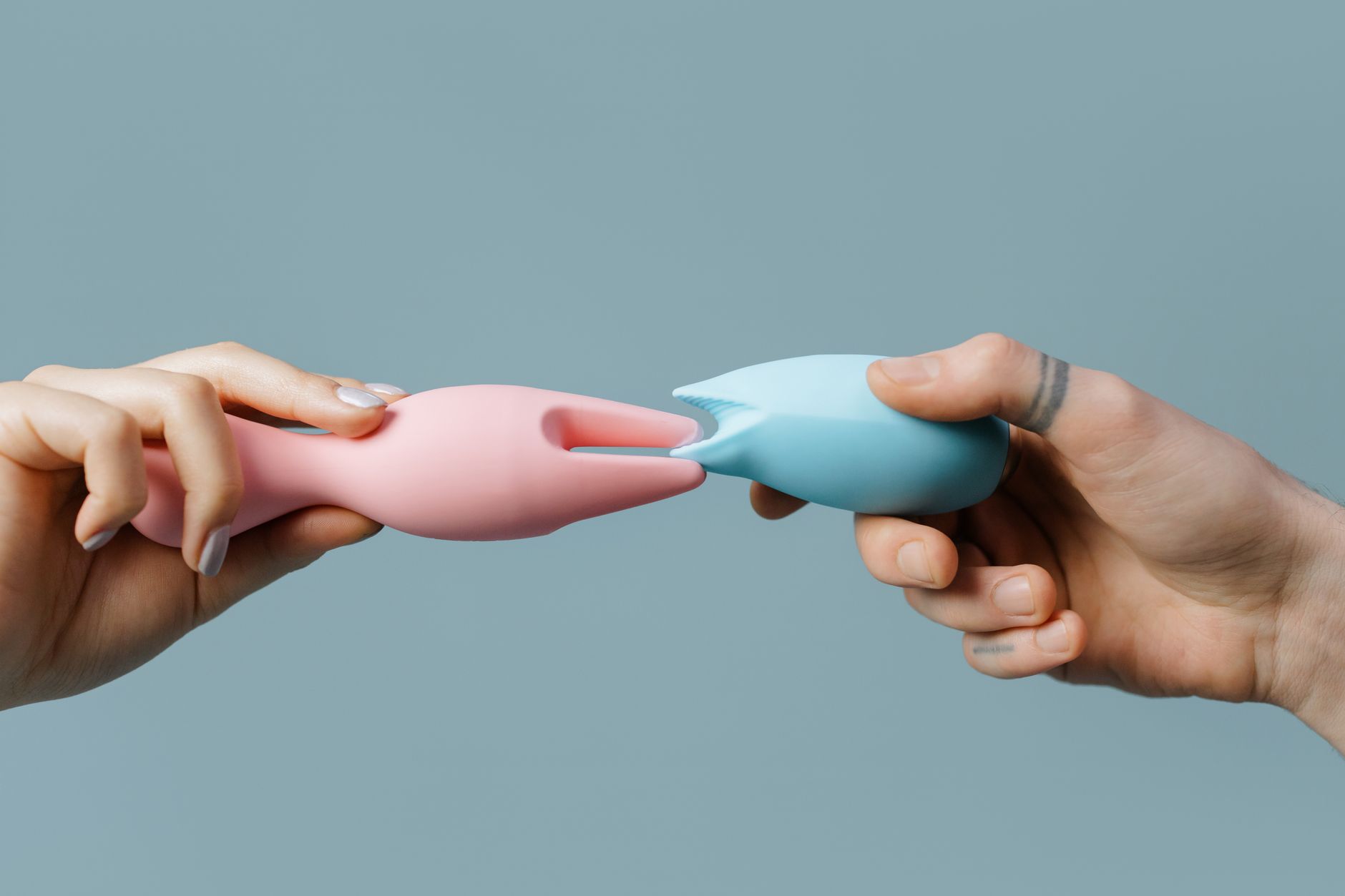
The honest truth about switching to suction
If you've spent years with a traditional vibrator, your clitoris has learned a very specific language. When you pick up a lemon vibrator, you're not just upgrading. You're learning to speak with your body in an entirely different way.
The difference isn't subtle. And that's actually why so many people have the exact same reaction: "Wait. That's... completely different." Some people love it immediately. Others need time to adjust. Both responses are completely normal.
What traditional vibrators actually do
Traditional vibrators work by oscillating. They shake, buzz, or pulverize against your skin at a set frequency, usually anywhere from 50 to 100+ Hz depending on the toy. This creates sustained, direct friction. Your clitoris responds to this rhythm by building arousal through accumulated stimulation. It's reliable, it's familiar, and for many people, it's been the primary pathway to orgasm.
The brain learns this pattern. Over time, orgasm becomes contingent on that specific type of input. Which isn't a problem. Until you introduce something entirely new.
What lemon vibrators actually do
Lemon clitoral vibrators use suction and gentle pulsing instead of direct vibration. Think of it less like a jackhammer and more like a mouth. The sensation is one of gentle pulling and release, rather than relentless buzzing. This targets different nerve clusters around the clitoris and can produce sensations that feel deeper, more concentrated, and for many people, more intense.
The key difference: traditional vibrators stimulate through friction. Lemon vibrators stimulate through pressure changes and suction. Your clitoris responds to this differently because the nerve pathways being activated are not the same ones that traditional vibration relies on.
Why the transition feels weird at first
This is the part nobody explains clearly. When you switch from traditional vibrators to a lemon suction toy, you're not just changing tools. You're retraining your nervous system.
Your body has spent months or years learning that "this buzzing feeling equals pleasure equals orgasm." When you introduce suction, the neural pathway is different. Your brain initially says, "This doesn't feel like sex. Where's the familiar buzz?" This isn't dysfunction. It's just learning.
I recommend thinking of this as a reset rather than a replacement. You're not broken. Your clitoris isn't tired. You're learning new vocabulary for pleasure.
The four main sensations that change
Intensity perception. Suction toys can feel stronger than traditional vibrators, even at lower settings. This isn't because they're more powerful in watts. It's because the stimulation pattern is more concentrated. Many people start on pattern 1 or 2 on a lemon vibrator and find it's already intense. That's normal. You'll adjust downward from what you're used to.
Pressure vs. movement. With traditional vibrators, you feel the toy moving against you. With suction, you feel something different. The toy creates a pressure change. Some people describe it as rhythmic pulling or pulsing. It requires less physical pressure from you to feel intense, which actually gives you more control.
Build time. Many people report that traditional vibrators require consistent application until orgasm appears. Lemon vibrators often work faster because suction concentrates sensation. The buildup is often steeper and quicker. If you're used to a 15-minute session with a traditional toy, you might orgasm in 8 minutes with suction. This is a feature, not a flaw.
Aftereffect. Some people report that suction toys create a different feeling even after use. Your clitoris might feel more sensitized or awake. This usually disappears within a few minutes but is worth noting if you're planning multiple sessions.
How to actually switch without frustration
Don't abandon your old toy. This sounds counterintuitive, but here's why it matters. Your nervous system is elastic. You can learn new pathways while keeping old ones intact. Many people find that alternating between traditional vibrators and lemon clitoral vibrators actually deepens their overall pleasure capacity.
Start with intention, not pressure. Commit to three sessions with your lemon vibrator before deciding it's "not for you." The first session is often the weirdest. The second usually feels more coherent. By the third, your body starts speaking the language.
Begin at the lowest settings. If you're using something like the Lemon's pattern options, start at 1 or 2. You're not being conservative. You're respecting that your nervous system hasn't met this sensation before. You can always increase intensity once you understand what you're feeling.
Use positioning to your advantage. With traditional vibrators, angle doesn't matter much. With suction, it does. The opening of the toy should create a seal with your clitoris. Experiment with angles until you feel the suction actually engaging, not just pressing. This is the difference between "nothing's happening" and "oh, okay, now I feel it."
Consider longer warm-up time. Your body might need more arousal before suction feels good. Spend extra time with foreplay, fantasies, or even your traditional vibrator first. Once you're properly aroused, suction toys often feel significantly better.
The psychology of switching
Let's be honest. There's a psychological piece here too. Traditional vibrators are ubiquitous. You've probably seen them everywhere. They feel predictable. When you switch to something like a lemon suction toy, you're doing something different. And "different" can feel vulnerable, even exciting.
If orgasm doesn't happen in the first session, your brain might whisper, "See? This doesn't work for you. Go back to what's familiar." That voice is just your nervous system being protective. It's not evidence of incompatibility.
Some people also hold unconscious beliefs about what real pleasure should feel like. If you've spent years with traditional vibrators, that sensation has become the template for "real sex." Suction feels different, sometimes gentler, sometimes more intense. Neither is more real. They're just different conversations with your body.
When to stick with what you know
Not everyone wants to switch. And that's completely fine. If traditional vibrators give you reliable, satisfying orgasms and you're happy, there's zero reason to change. Pleasure isn't a hierarchy. A vibrator that works for you is the right vibrator for you, period.
That said, many people find that trying a lemon clitoral vibrator expands their entire capacity for pleasure, even if they still prefer their original toy sometimes. Think of it less as "replacing" and more as "expanding your toolkit." Different sensations, different moods, different partners, different times in your cycle. More options means more flexibility.
The timeline for adjustment
Most people adjust to a new toy within 3-5 sessions. Your nervous system is genuinely plastic. By the third or fourth time, the sensation stops feeling alien and starts feeling familiar. By the fifth session, many people report that they'd actually prefer suction to traditional vibration, or they find they like both equally.
If you're six sessions in and it still feels wrong, it might genuinely not be your toy. Bodies are different. But give yourself grace during the learning phase. You're not broken. You're just getting acquainted with a new language.
A note on sensation after switching
One thing I hear from people who switch to lemon vibrators: traditional vibrators sometimes feel less satisfying after experiencing suction. This isn't your toy wearing out. It's your nervous system expanding. You've experienced something new. Going backward can feel anticlimactic.
This is totally reversible. Your nervous system will adjust. And again, many people find they genuinely like both and alternate based on mood, timing, or what kind of session they're after.
FAQ: Common questions about making the switch
Will my clitoris adjust back if I use traditional vibrators after trying suction?
Yes. Your nervous system is flexible. You can absolutely switch between different toys without any lasting effect. Some people alternate them based on their arousal level that day. There's no permanent rewiring. Your body is more adaptable than you'd think.
How do I know if the lemon vibrator isn't working or if I just need more time?
Give it three committed sessions. By session three, you should have a sense of whether suction feels good to you. If it still feels uncomfortable (not just unfamiliar, but actually painful or wrong), it might not be your toy. But "weird" on session one is usually "interesting" by session three.
Can I use both traditional vibrators and lemon clitoral vibrators in the same session?
Absolutely. Some people warm up with traditional vibration and finish with suction. Others do it backward. There's no rule. Layering different sensations can actually create more complex pleasure than one toy alone.
Why does my lemon vibrator feel stronger than my traditional vibrator even at a lower setting?
Because suction concentrates stimulation in a different way. It's not that it's objectively more powerful in watts. It's that the sensation pattern feels more intense because it's activating different nerve clusters. Think of it like the difference between a massage gun and a massage therapist's hands. Different tools, different intensity perception.
What if I like the suction but it's making orgasm take longer than I expect?
Lower the intensity or use a different pattern. Some people need gentler suction to warm up their nervous system to the sensation. Others find that a specific pattern works better than others. Experiment. Also check your positioning. A proper seal makes a huge difference.
Is it normal to feel numbness or reduced sensation after using a lemon vibrator?
Slight temporary sensitivity changes are normal after any intense session. Your clitoris needs a reset period just like any body part. If this persists for hours or happens regularly, reduce intensity or duration. And if you're dealing with persistent numbness from stimulation, consider whether physical recovery or pelvic floor work might help.
The real takeaway
Switching from traditional vibrators to suction-based lemon clitoral vibrators isn't a lateral move. It's an expansion. Your body has learned one dialect of pleasure. You're adding a second language. There will be a learning curve. That learning curve is not a sign of incompatibility. It's just evidence that you're trying something genuinely new.
Give yourself permission to feel weird in the process. Give yourself permission to need three sessions before deciding. And give yourself permission to prefer traditional vibrators anyway, if that's what your body tells you.
Your pleasure isn't a performance. It's a conversation between you and what feels good. If you're navigating shifts in sensation or desire, our guide to physical sensation changes might help too. And if you have questions about technique or what might work better for your body, reach out anytime.