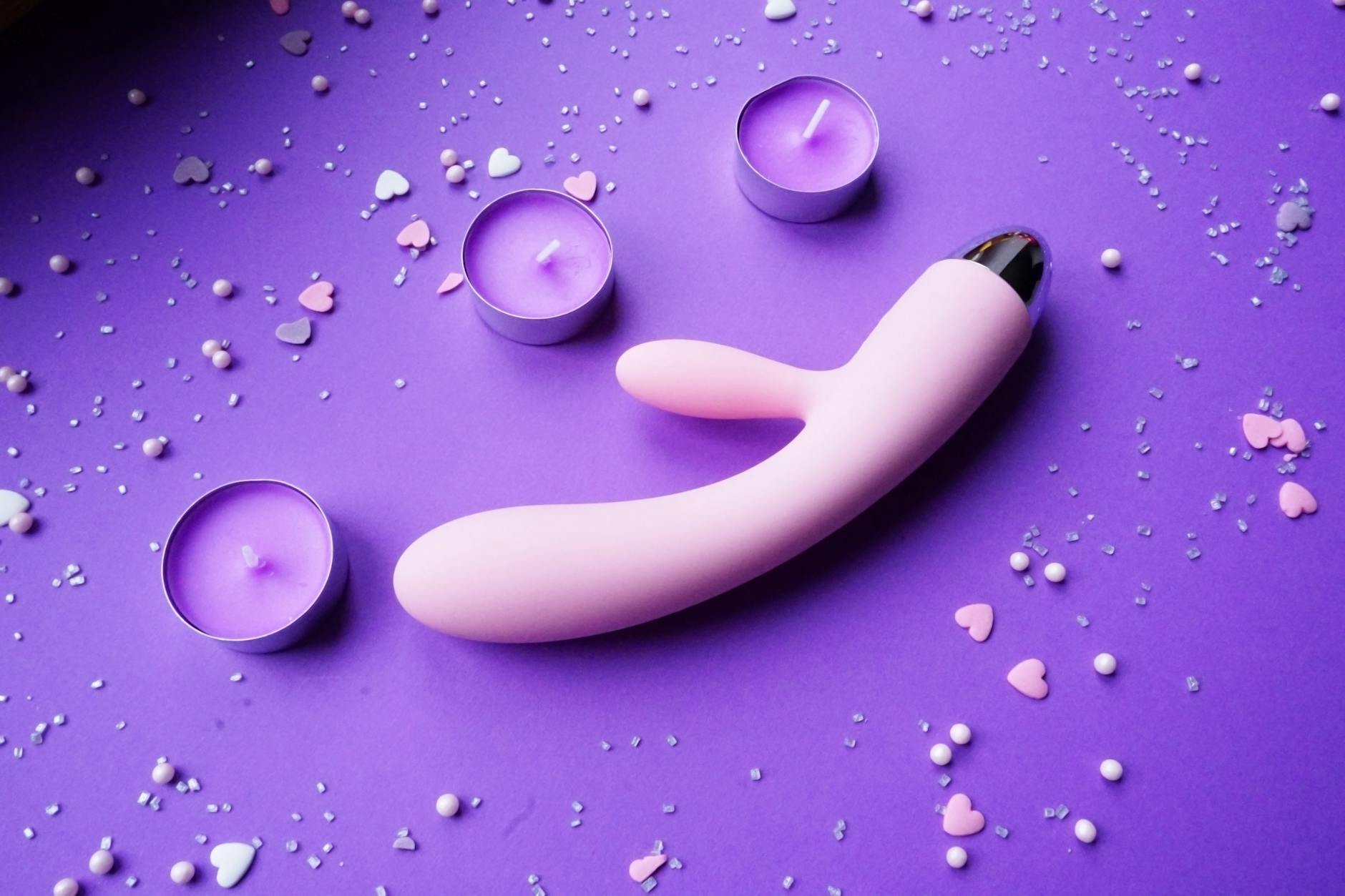
Why introducing toys into a new relationship feels like a whole different experience
Let's be real. The lemon vibrator you loved alone feels completely different the first time you use it with someone new. Not worse, not better necessarily. Just different. Your body responds differently. Your brain is processing a different cocktail of vulnerability, excitement, and self-awareness. And honestly? That's completely normal.
This isn't about the toy changing. It's about what changes in you when there's another person in the room.
The vulnerability factor nobody talks about
When you're alone with a lemon clitoral vibrator, you own the whole experience. You know what you like, you know the rhythm that works, you can stop whenever you want without explanation. There's no performance element.
Add a partner and suddenly there's an audience. Even if they're enthusiastic and supportive, some part of your nervous system is tracking their presence. Are they bored? Do they find this hot? Am I taking too long? These questions live in the background whether you want them to or not. For some people, this awareness kills sensation. For others, it amplifies it.
The clitoris has around 8,000 nerve endings, but it also has an incredibly sensitive relationship with your mental state. Stress, self-consciousness, and distraction literally reduce blood flow to the area. So if you're using a lemon vibrator with a new partner and it suddenly feels less intense than when you're alone, you're not broken. Your nervous system is just divided.
What's actually happening in your body
Your parasympathetic nervous system (the one that says "it's safe, relax") and your sympathetic nervous system (the one that says "there's a threat, stay alert") don't work well together. Early in a relationship, even when you trust someone, your sympathetic nervous system is somewhat activated. You're still in the learning phase. You're still reading micro-expressions and tone shifts. You're still figuring out what's safe.
This activation makes arousal take longer to build. It makes sustained focus harder. The lemon clitoral vibrator does its job, but your body is running on a slightly different operating system than it would alone.
On top of that, when there's another person present, the sensations from the vibrator compete for attention with visual input, touch from your partner, and the sound of breathing. Your brain has to process all of it at once. Sometimes that creates a richer experience. Sometimes it just creates noise.
How trust changes the equation
Here's what six months looks like compared to week two. After you've had conversations about pleasure. After you've watched your partner handle disappointment with grace. After they've seen you tired and messy and unfunny and they're still there. That foundation shifts everything.
With trust, you can be mentally present during sex in a way that early-stage butterflies make nearly impossible. Your body relaxes. Blood flow normalizes. The lemon vibrator that felt muted suddenly feels incredible because you're not splitting your attention between sensation and self-surveillance.
This is why many couples report better orgasms after the first year than in the first month. It's not the toy changing. It's your nervous system finally believing it's safe.
The role of communication before, during, and after
The couples I work with who navigate toys most successfully do one thing consistently. They talk about them outside of the bedroom first.
Not "I want to use this during sex next time." That comes later. I mean a conversation that goes: "I use a lemon vibrator alone and it works really well for me. I'd eventually like to explore it with you, but I'm a little nervous about it because." That last part matters. The "because."
Because you're worried you'll take too long. Because you're afraid they'll feel like they're not enough. Because you're not sure if it means something about your attraction to them. Because you just feel self-conscious. Name it. Let them sit with it. Let them respond.
Then, the first time you actually use a lemon clitoral vibrator together, don't go in expecting the same sensation or the same timeline you had alone. Go in curious. What's different? Where does your attention go? Do you like it when they hold it, or do you prefer to hold it yourself? These questions transform the experience from "performing pleasure" to "exploring together."
After, the conversation matters just as much. "That felt weird in this way I didn't expect, and I want to try it differently next time." Or "That was incredible and here's why." This post-game debrief is where real intimacy lives. It's where you move from using a tool to actually understanding each other.
Why the first time often feels anticlimactic
You've probably heard it. Someone tries a lemon vibrator with a partner for the first time and expects fireworks. Instead, it feels like a regular Tuesday. The buildup in their head was enormous, and the actual experience was just.fine.
This is almost always about expectation colliding with reality. You've spent months or years imagining how hot this will be, how your partner will react, how it will feel. Your brain built a story. Real life is always less dramatic than fantasy because it includes actual bodies, actual timing, actual vulnerability.
The anticlimactic first time is actually a gift. It means the pressure is off. You can relax into the next time knowing it doesn't have to be a religious experience. It just has to be authentic.
What makes it feel better over time
There's a progression that happens if you stick with it. First time: weird and self-conscious. Second through fourth time: you're gathering data, experimenting, finding out what rhythm your partner prefers and what angle works for your body. By the fifth or sixth time, something shifts. It stops being "using a toy with my partner" and starts being just part of how you have sex.
This is when the lemon clitoral vibrator actually starts to feel as good as it does alone, or better. Because you're not mentally narrating the experience anymore. You're just in it.
The couples I've worked with say this shift usually happens around the two-month mark of regular use. Not because anything changed about the vibrator. Because something changed about your sense of safety and permission.
A word on different desires and paces
Here's the thing that doesn't get said often enough. One person in a couple might be wildly enthusiastic about incorporating toys. The other might be hesitant, unsure, or just not interested. Both are fine. Both are real.
If you're the one bringing a lemon vibrator into the relationship, don't frame it as "this will be better for us." Frame it as "this is important to me and I'd love to explore it with you." That's different. One is a promise about the other person's experience. The other is honesty about your own.
If your partner is hesitant, ask why. Really ask. Not during sex, not as a setup. Ask it like you're trying to understand them. "Are you worried it means something? Are you nervous about how to use it? Do you just prefer it not to be part of what we do?" Listen to the answer without defending. Then decide together if you want to work through it or accept the boundary.
When to bring it up, and how
Timing matters. Don't introduce a lemon clitoral vibrator for the first time when you're already in an argument about something else. Don't do it at the end of a long day when you're both fried. Don't do it when you're in a vulnerable emotional place and need external validation that the sex is working.
Bring it up when things are solid. When you've had good sex recently. When you're both rested. When you can approach it as play, not as repair work.
The FAQ
Does using a lemon vibrator with a new partner mean there's a problem with the sex?
No. Wanting to explore a lemon clitoral vibrator with someone new is usually about curiosity, not dissatisfaction. It's actually a sign you feel safe enough to be vulnerable and ask for what you want. That's healthy.
Will a lemon vibrator make my new partner feel inadequate?
It can, if you approach it wrong. Don't frame it as "you're not enough." Frame it as "this is part of what I like, and I'd love to share it with you." There's a huge difference. The first one creates defensiveness. The second one creates possibility.
How long should I wait into a relationship before introducing a lemon clitoral vibrator?
There's no hard rule. I usually suggest at least two months of regular sexual contact, so you've built some baseline comfort. But honestly, if you've had honest conversations about it and you both feel ready, earlier can work too. The comfort level matters more than the timeline.
Does sensitivity feel different when using a lemon vibrator with a partner?
Often yes. Early-stage relationships, especially, can make sensations feel muted because your nervous system is partially in fight-or-flight. This normalizes as trust builds. If it's still an issue after several months, it might be worth exploring what's underneath the tension.
Should I use the same lemon clitoral vibrator solo and with a partner, or get a different one?
Either works. Some people like having a dedicated toy for partnered sex because it creates psychological separation. Others like using the same one. There's no rule. Do what feels right.
What if my partner wants to use the lemon vibrator on me and I feel too self-conscious?
Start with you holding it while they watch or touch you elsewhere. Then gradually hand over control as you get more comfortable. Or don't. You get to set the pace. Just be honest about what you need.
The truth about different doesn't mean wrong
Using a lemon vibrator with a new partner will feel different than using one alone. That's not a failure. It's just the nature of adding another nervous system to the equation. The goal isn't to recreate your solo experience. It's to build something new together.
If you're navigating this right now, be patient with yourself. The anticipation you built up in your head will probably not match reality. That's not because the vibrator is wrong or your partner is wrong or your body is wrong. It's because real intimacy is messier and slower and more uncertain than fantasy.
But here's what I've seen happen. When couples stick with it, when they talk about it, when they give it time to evolve, something genuinely shifts. The lemon clitoral vibrator stops being the thing you were nervous about and starts being part of your normal. And normal, shared pleasure is actually the best kind there is.
If you're ready to explore but feeling stuck on the conversation piece, reach out. That's what I'm here for.