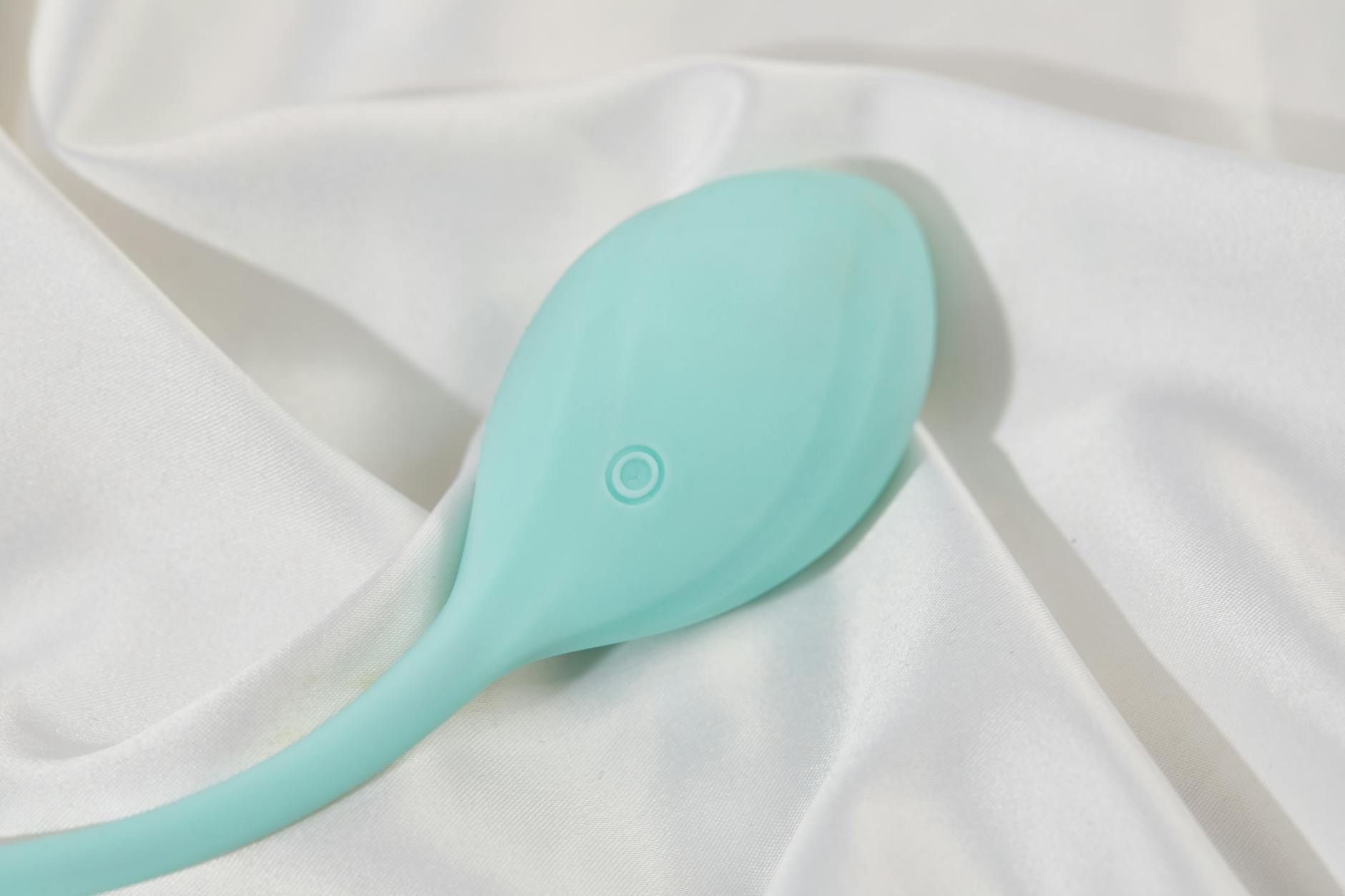
Here's the thing about post-orgasm sensitivity
You've just come. It was good. Your body is still vibrating (literally if you're holding a lemon vibrator). So naturally, you want to keep going, or at least keep the sensation going. But the moment your partner touches you again, or you press the Lem back against your clitoris, suddenly everything feels like too much. Like the intensity switched up three notches. Like you'd actually rather they stop.
This is not a sign that something is wrong. This is your nervous system working exactly as it evolved to.
What actually happens in your nervous system after orgasm
Let's start with the physiology. During arousal and climax, your clitoris becomes increasingly sensitive. Blood floods the area. Nerve endings are firing constantly. Your brain is essentially in a state of controlled chaos, managing pleasure signals from multiple parts of your body at once.
Then you orgasm. A cascade of neurochemical events happens in about 8 seconds. Your pelvic floor muscles contract rhythmically. Oxytocin floods your bloodstream. Dopamine spikes. Your nervous system has been running at maximum output.
What happens next is the refractory period. This is the recovery phase where your nervous system downregulates. Blood slowly leaves the genital tissue. Hormone levels shift. Your clitoris becomes acutely sensitive not because it's stimulated, but because it's exposed. The tissue is engorged and the nerve endings are still partially activated. It's like touching a nerve that's not quite asleep yet.
This is where a lemon clitoral vibrator or any device can feel overwhelming. You're asking an already-firing nervous system to process more stimulation when it's trying to recover.
Why lemon vibrators amplify this sensation
Lemon vibrators work through gentle suction and pulsing patterns, which is brilliant for building arousal. But that same mechanism makes post-orgasm sensitivity more pronounced.
Unlike a traditional vibrator that numbs sensation slightly through rapid-fire stimulation, the suction motion of devices like the Lem creates a sustained pressure and release cycle. After orgasm, when your clitoris is hypersensitive, that pulsing feels magnified. Your nerve endings interpret it as more intense than it actually is because your pain and pleasure thresholds have shifted.
Add to that the fact that suction-style lemon sexual toys have a smaller contact surface than wand vibrators. More concentrated sensation means more intensity at the point of contact. Exactly what makes them excellent for precision during arousal becomes uncomfortable during recovery.
The refractory period is different for everyone
How long does post-orgasm sensitivity last? Anywhere from 30 seconds to 10 minutes, depending on your body and your orgasm. Some people never experience it. Others find it unbearable for a solid 5 minutes.
This varies based on several factors. If you had an intense orgasm, the refractory period is usually longer. If you're still in a highly aroused state (say, with a partner you're actively engaged with), sensitivity often drops faster because your nervous system stays partially activated. If you're solo, sitting quietly after orgasm, the sensitivity tends to linger longer.
Age matters too. Younger bodies often cycle through refractory periods faster. As you get older, particularly into your 40s and beyond, the sensitivity can feel more pronounced because hormonal changes (particularly dropping estrogen) mean tissue recovery takes slightly longer.
What to do if your lemon vibrator feels too intense after orgasm
First, know that pulling away is completely valid. You don't owe your body or your partner continuous stimulation. Full stop.
That said, if you want to keep the experience going without the discomfort, here are practical options.
Switch to hands-only touch. Your own fingers or your partner's can offer gentler, more variable pressure than any device. You control the intensity moment to moment. It's also grounding in a way that tools sometimes aren't.
Move to a different area. Your inner thighs, your breasts, your neck are still pleasure-responsive without the acute sensitivity. Many people find this bridges nicely from intense sensation to gentle reconnection.
Use the lowest pattern setting. Most lemon clitoral vibrators, including the Lem, have multiple intensity levels. Drop to pattern 1 or 2. You might be surprised how pleasurable it feels at the lowest threshold. You're maintaining contact without the sensory overload.
Wait 60 seconds. Seriously. Most people don't realize how quickly the sensitivity drops if you just pause. By the 1-minute mark, you can usually re-engage with your usual patterns without discomfort. That brief pause also lets your nervous system actually complete the downregulation cycle instead of fighting it.
Try external pressure instead of direct contact. Place the vibrator against your pubic mound or your inner thigh instead of directly on your clitoris. You get the sensation and the psychological benefit of continued contact without triggering hypersensitivity.
The partner conversation that matters
If you're with someone, the post-orgasm sensitivity moment is a communication window. Not all of it needs to be sexual.
Many people experience a desire for closeness without stimulation after orgasm. They want to be held, kissed, or simply present with their partner. This is neurochemically driven. Oxytocin is spiking, which creates a bonding response. Your nervous system wants connection, not more input.
Tell your partner: "I want you close, but I need a minute before touching again." That's different from "I'm done." It's an invitation to shift the energy rather than stop it.
If your partner doesn't understand why continued stimulation suddenly feels bad when moments ago you were asking for more, that's worth a conversation outside the bedroom. The post-orgasm period is not the moment to explain physiology. It's the moment to say what you need and have that need respected.
When sensitivity means something else
Post-orgasm hypersensitivity is normal. But if you're experiencing pain that feels sharp or burning (rather than just overwhelmingly intense), that's different.
Genital pain after sex can indicate infection, dermatitis, or in some cases, a pelvic floor tension pattern. If this is happening regularly, it's worth mentioning to your GP. Most cases are easily treatable.
Also: if the sensitivity is so severe that you're dreading orgasm because of what comes after, that's worth exploring with a pelvic floor physical therapist. Sometimes the issue isn't the vibrator or the orgasm itself. It's tension in the pelvic floor muscles that's amplifying sensation. A few sessions of pelvic floor release work can completely change the experience.
The broader pattern
Your body is not broken because lemon vibrators feel intense after you come. Your body is protecting itself. The refractory period exists. Hypersensitivity exists. These are features, not bugs.
The best sex, honestly, often happens when you stop fighting your nervous system and work with it. That means knowing your refractory period. It means communicating what you need in that window. It means having tools like the Lem that you can use flexibly, at different intensities, depending on where you are in your cycle.
Your pleasure doesn't end at orgasm. It shifts. Learning the shape of that shift is part of knowing yourself sexually.