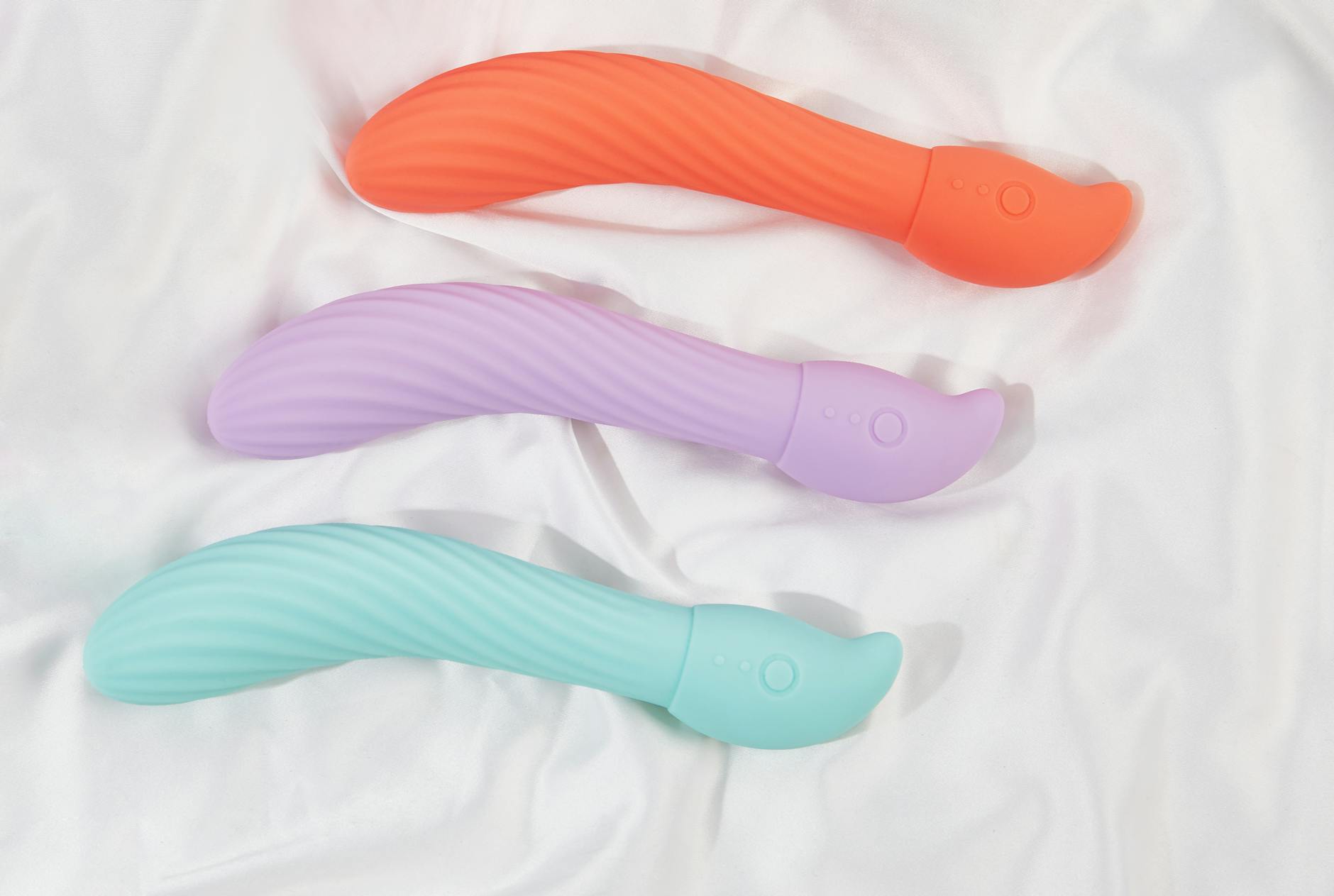
Let's talk about what actually happens
Your body changes after 40. Not worse, just different. And if you've been using a lemon vibrator for years and suddenly it doesn't feel the same, you're not imagining it.
The good news: this isn't a dead end. It's information. Understanding what's shifting helps you recalibrate instead of giving up.
How sensitivity changes after 40
Several things happen simultaneously. Skin becomes slightly less sensitive to certain types of stimulation, partly due to changes in estrogen and collagen. Blood flow to genital tissue can shift. The nerve endings in the clitoris don't disappear, but how quickly they respond to vibration patterns changes.
Your nervous system also matures. What felt thrilling at 30 might feel one-note at 45. You've logged thousands of hours with pleasure now. Your brain is pickier. This is not deprivation. This is expertise.
Most people interpret these shifts as loss. They're usually reframing opportunities.
Why your lemon vibrator suddenly feels less intense
If you've stuck with the same pattern on your Hello Nancy lemon vibrator for a decade, your nervous system has essentially memorized it. Adaptation. The vibration is identical, but your body is no longer firing at full volume in response.
Second issue: intensity settings. If you've been using a Lem vibrator or similar clitoral vibrator on the same low-to-medium pattern, you might not have explored the higher settings. Many people stay in the comfort zone without knowing what the upper end actually delivers.
Third: technique. In your 20s and 30s, direct contact worked. After 40, angle matters more. Pressure matters more. Timing matters more. You need information, not just a device.
The actual fixes
Explore the full intensity range of your lemon vibrator
Most clitoral vibrators, including lemon suckers and similar devices, have 3-5 intensity levels plus multiple patterns. If you've been using pattern 1 or 2, spend a week on pattern 3. Then pattern 4. Your body will respond differently to each.
Don't jump straight to maximum. That's not the goal. The goal is mapping what actually works now, not chasing the old thrill.
Angle and pressure change everything
After 40, pinpoint stimulation becomes less important than nuanced contact. Instead of pressing the tip of your lemon vibrator directly against your clitoris, try angling it slightly. This distributes pressure across more nerve endings.
Start with medium pressure. Many people expect they need more when they actually need different.
Warm-up time extends
Your body needs longer to build arousal now. Budget 15-20 minutes before introducing the vibrator. This isn't a step backward. It's how your nervous system works in your 40s and beyond. Work with it, not against it.
Arousals that feel slower are often deeper. Don't mistake gradual for weak.
The partner dynamic shifts too
If you have a partner, they've probably noticed the shift too. The conversation to have isn't "something's wrong with me." It's "my pleasure works differently now, and I want to explore what that means for us."
Many couples in their 40s report that lemon vibrators work better in partnered sessions than solo, precisely because the attention and presence create the longer warm-up that your nervous system now prefers.
Hormonal context matters
If you're approaching perimenopause or already there, hormonal fluctuations affect how your clitoral tissue responds to vibration. Some weeks feel like your 30s. Other weeks, the same lemon clitoral vibrator feels completely different.
This is normal. Track it. You don't need to change your vibrator. You need to understand the rhythm your body is on.
Lubrication and comfort
After 40, lubrication becomes more relevant. Not because something is wrong, but because thinner tissue appreciates the glide more. A water-based lubricant can transform how a lemon vibrator feels without changing anything about the device itself.
This is especially true if you notice any irritation or if pleasure sessions feel less comfortable than they used to. Lube isn't a sign of dysfunction. It's a precision tool.
Pelvic floor strength and relaxation
Your pelvic floor muscles are stronger now, but they're also tighter. Kegels are good. But equally important is learning to fully relax. Many people in their 40s carry tension in the pelvic floor without noticing.
Spend two minutes before pleasure sessions deliberately releasing that tension. Breathe into your pelvic floor. Let it soften. A relaxed pelvic floor responds more quickly to vibration and produces more intense sensation.
When to consider a different device
If you've been using the same lemon vibrator for five-plus years, the motor might be losing power. Toys don't last forever. If intensity has genuinely dropped across all patterns and you've tried the adjustments above, it might be time to replace it.
But before you do: test with a newer device at a friend's place or read reviews of updated models. You might discover that a tool designed for your current nervous system works in ways your old one never did.
The mindset shift that changes everything
Here's what I tell clients who hit 40 and panic about pleasure. Your body didn't downgrade. The person using the body upgraded. You have decades of experience now. You know what you like. You've stopped performing for imaginary audiences.
Lemon vibrators don't feel different because you're broken. They feel different because you're better at pleasure than you used to be. You just need to learn the new language.
Frequently asked questions
Why does my lemon vibrator feel numb sometimes even at high intensity?
Adaptation is real. If you use the exact same pattern every session, your nervous system stops firing at full intensity. Switch patterns weekly. Also check whether you're applying the vibrator at the same angle and pressure. Small changes in technique can feel revolutionary.
Is it normal for lemon clitoral vibrators to feel less pleasurable after 40?
Absolutely. Sensitivity shifts, arousal buildup changes, and the nervous system matures. This isn't failure. It's a prompt to adjust technique, intensity, warm-up time, and possibly lubrication. Many people report their most intense orgasms happen after intentionally recalibrating.
Should I switch from a lemon vibrator to a different type of toy?
Not necessarily. Before you replace it, try exploring all the intensity settings and patterns you haven't used, adjusting angle and pressure, extending warm-up time, and using lubrication. Most people who think they need a new device actually just need to use their existing one differently.
Does lubrication change how a lemon vibrator feels?
Yes. Water-based lube creates a smoother glide and can reduce irritation on thinner tissue after 40. It doesn't change the vibration itself, but it changes how your body experiences it. Many people discover sensations they didn't know were possible once they add lube to the equation.
Is it perimenopause if everything feels different down there?
Maybe. Hormonal shifts in perimenopause do affect clitoral sensitivity and arousal. But age alone changes sensitivity. Even without hormonal fluctuations, your 40s feel different from your 30s. Track patterns over a few weeks. If shifts are dramatic or accompanied by other symptoms, talk to a gynecologist.
Can I make my lemon vibrator work as well as when I was younger?
Yes, but differently. Your nervous system has changed, and that's not negotiable. But a lemon vibrator in your 40s, used with current knowledge about your body's needs, often produces more satisfying pleasure than it did at 30. Different isn't worse. It's just information you haven't learned yet.
The bottom line
Your body after 40 isn't less capable of pleasure. It's different. A lemon clitoral vibrator that used to feel perfect might need you to change your approach to intensity, angle, warm-up time, or technique. Most of the time, that's not a sign to quit. It's a sign to explore.
If you want to recalibrate your pleasure, start by testing a few small changes: spend one week on a pattern you've never used, add five minutes to warm-up, or try a water-based lubricant. Track what shifts. Your body will tell you what it needs now.
If you're struggling with desire itself or experiencing pain, reach out to a sexual health specialist or schedule a conversation with a gynecologist who specializes in midlife health. You deserve pleasure that works for your life right now, not a decade ago.
For more on making lemon vibrators work specifically for your sensitivity level, see our guide on why lemon vibrators work better for sensitive skin and deep dive into lemon vibrator intensity settings to unlock patterns you might not have explored yet.
Your pleasure matters. It always has. It still does.